
Last updated November 16, 2026
 Wrought iron
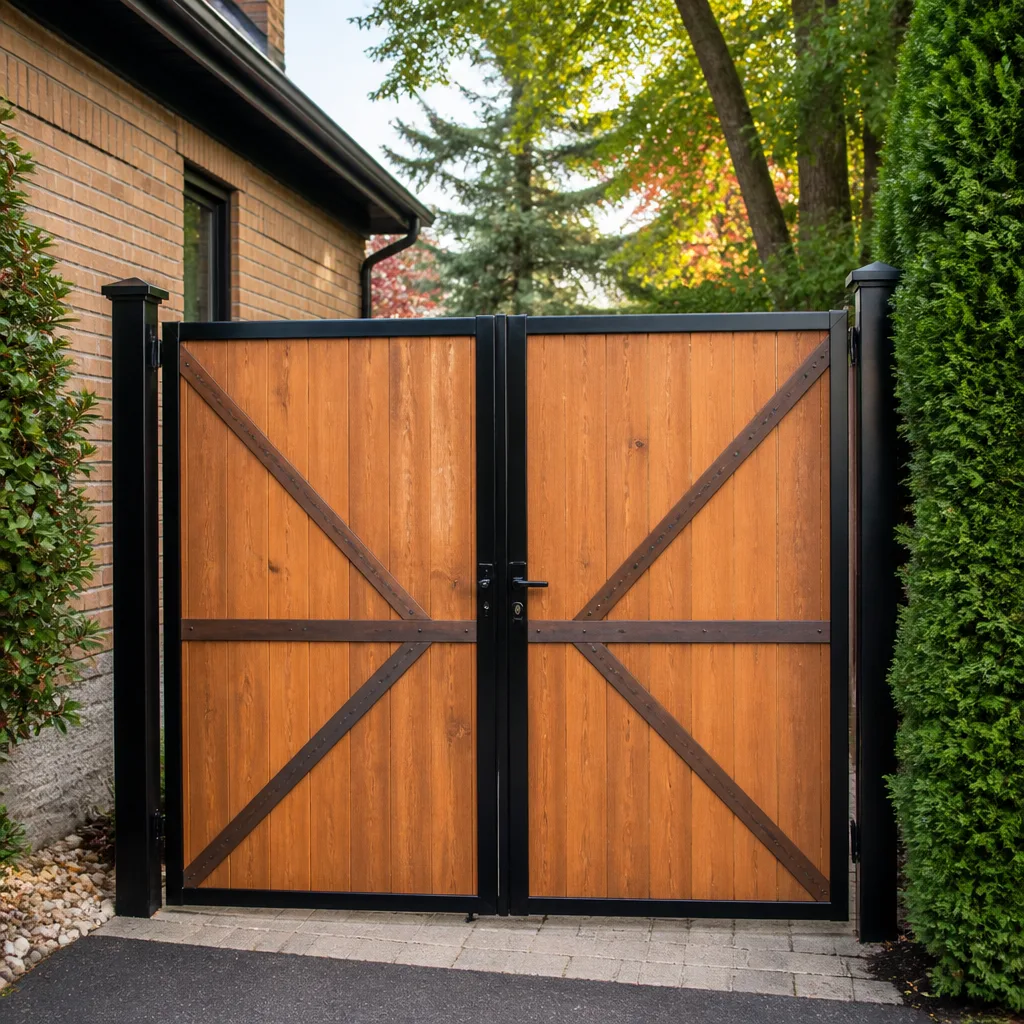 Wood & steel frame
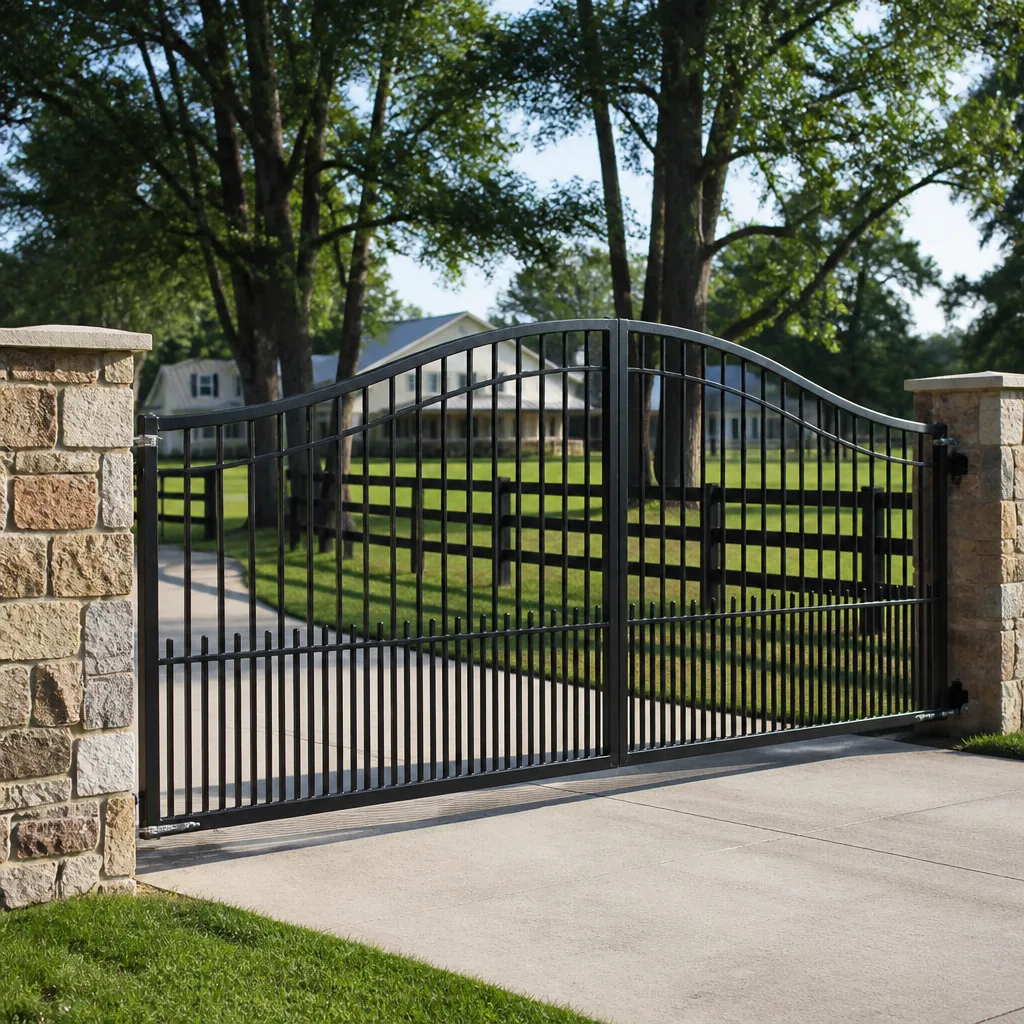 Farm & ranch
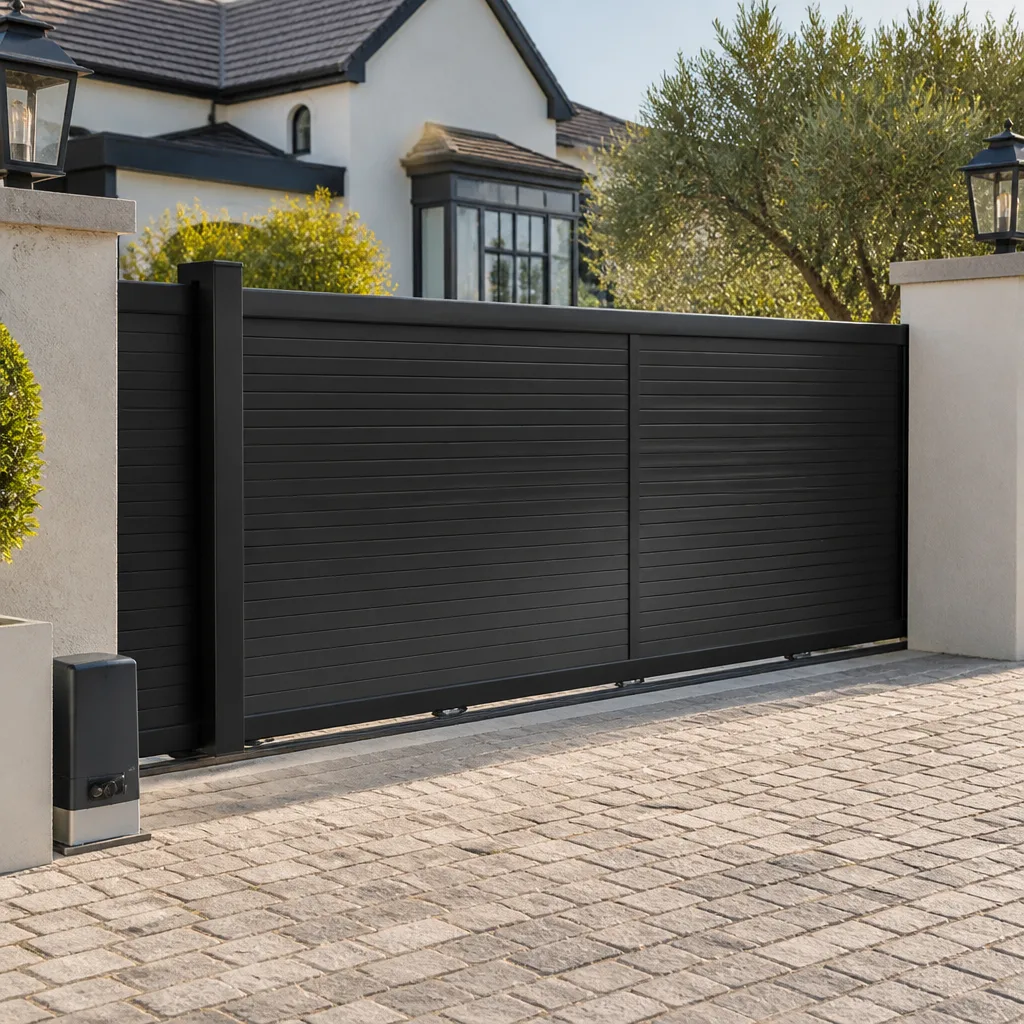 Sliding driveway gates
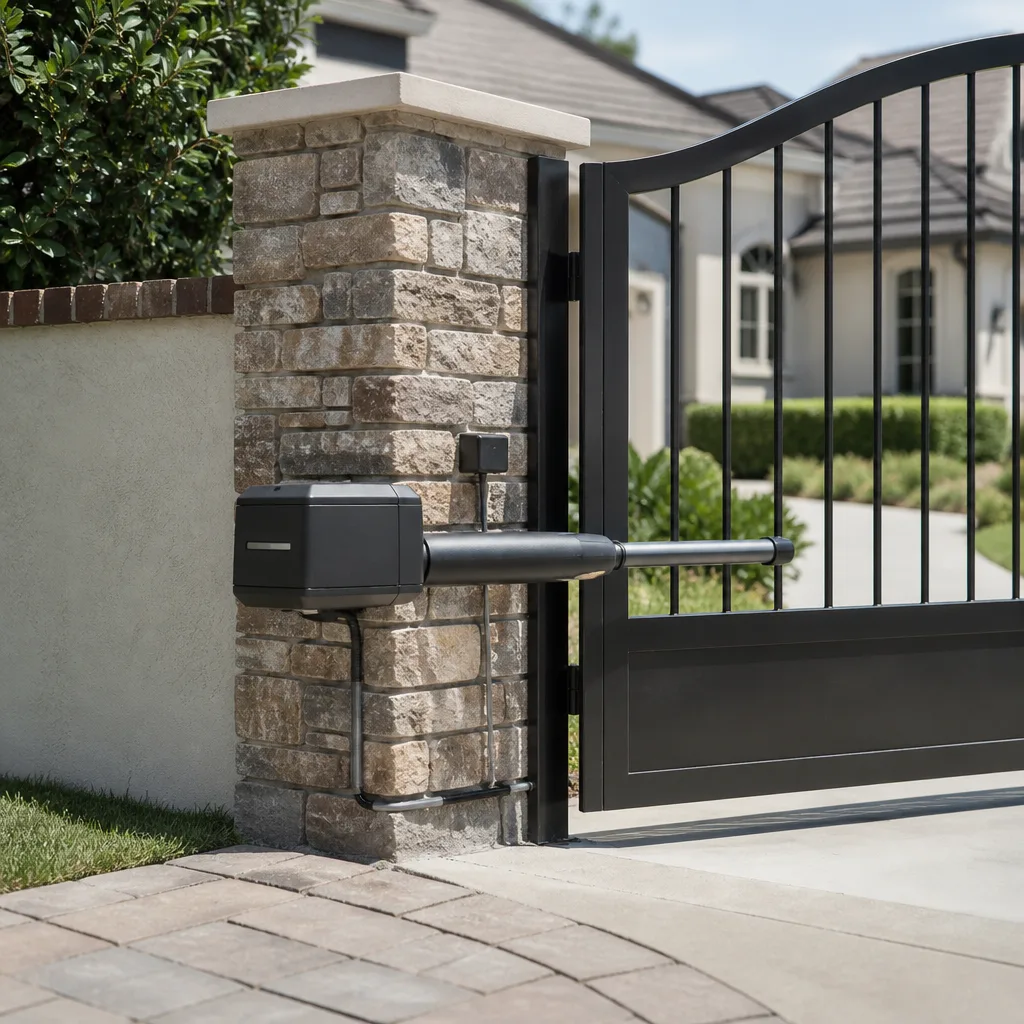 LiftMaster operators
Free on-site gate assessment - hinges, posts, and your LiftMaster or Nice gate operator checked before anything is quoted
The assessment is free and the quote is the invoice.
Get your free estimateThe Complete Guide to Gate Repair in Salinas
Most gate problems in Salinas get “fixed” at least twice. That’s not because the second repair is hard to find. It’s because the first visit treated a symptom instead of a cause. A gate that shudders on its track doesn’t need a shot of lubricant; it needs someone to check whether a post has shifted in the clay it’s set into. A swing gate that won’t close doesn’t always need a new operator; sometimes it needs proper hinge alignment and bolt tension. This guide walks through the failures we see across Salinas week after week, maps each one to its real cause, and shows you how to tell a true repair from a temporary patch.
Quick Answer
Gate repair in Salinas usually comes down to three root causes: hardware and hinge corrosion from the marine layer, post movement in the area’s heavy clay soil, and mismatched replacement components left behind by earlier generalist repairs. A gate-only specialist diagnoses which of these is actually driving the symptom before any parts are swapped, which is why the right repair lasts and the wrong one doesn’t. Call (888) 704-3384 for a free estimate; our technicians have up to 15 years of experience across nine gate and operator brands.
Styles & brands we work with
- Wrought iron
- Wood & steel frame
- Farm & ranch
- Sliding driveway gates
- LiftMaster operators
Table of Contents
- Why Do Gates Fail So Often in Salinas?
- Brand-Specific Failure Patterns in Salinas Residential Gates
- The Diagnostic Sequence a Gate Specialist Uses
- A True Repair vs. a Six-Month Band-Aid
- What You Can Do Yourself vs. What Needs a Professional
- Electric Gate Operator Problems: Motors, Control Boards, and Sensors
- How the Marine Layer and Clay Soil Shape Your Repair
- Should You Repair or Replace Your Gate?
Why Do Gates Fail So Often in Salinas?
The short answer: local conditions concentrate stress on a handful of specific components. Salinas sits in a valley with a cool, moist marine layer that rolls in most of the year, and its soil runs heavy with clay. Those two facts explain far more of the gate failures we see than age or brand. Metal that would last for years on a dry inland fence line will corrode at its hinge points and pivot hardware when it sits in moist, salt-laden air for hours daily. And the clay soil underneath gate posts behaves differently from sandy or loamy ground: it swells when wet and shrinks when dry, which shifts post footing and throws a gate’s geometry out of alignment over time. When a gate hangs poorly or won’t latch cleanly, that’s usually a post problem disguised as a gate problem.
On the electric side, moisture intrusion is the recurring theme. Control boards and receivers mounted on the outside of a gate facing the coastal weather are especially vulnerable. The morning damp gets in, contacts haze over, and the operator starts behaving erratically: opening halfway, reversing randomly, or refusing a command the remote sends cleanly. In our experience, this pattern shows up most in older residential installs where the enclosure has loosened or a gasket has worn through. Once water finds a seam, the board becomes a slow failure waiting to happen. Gate repair in Salinas often starts with symptom reading but almost always ends with fixing the cause, and that means realigning or re-setting the post footing, sealing or replacing the operator enclosure, and re-checking the whole mechanism against what the manufacturer designed for.
If you want a broader view of our local work, take a look at Salinas and what we cover.
Brand-Specific Failure Patterns in Salinas Residential Gates
Every operator brand has its own logic, its own diagnostic path, and its own weakness. Knowing which brand you’re working with changes the diagnosis from the first minute. Our technicians have up to 15 years of experience and work with LiftMaster, FAAC, Mighty Mule, and Elite, among the nine brands we service, and each one fails in a recognizable way.
LiftMaster
LiftMaster residential operators are common on gates installed in the past decade or so, and their failure signatures are consistent. When the limit switch drifts, the gate overtravels or stops short without a mechanical cause. Encoder errors show up as a gate that reverses mid-travel. If your gate is over ten years old and has never been serviced, the control board capacitors are usually the weak point.
FAAC
FAAC hydraulic and electromechanical units are found on many larger residential and small HOA gates in Salinas. The hydraulic models develop seal leaks over time, and you’ll often see oil sheen near the housing or declining performance in cold mornings before the fluid warms. Electromechanical FAAC units tend to lose limit precision and need recalibration. Both symptom families are hydraulic or limit-switch issues, not a dead motor.
Mighty Mule
Mighty Mule operators are budget-friendly and popular on lighter residential gates. Their weak points are the control board, the battery backup, and the solar connection if one is fitted. A gate that stops mid-swing in the afternoon but works fine in the morning is often a solar charging issue, not a motor issue. We see this pattern most on gates that face a tree line and lose sun exposure seasonally.
Elite
Elite operators are robust and common on heavier residential gates and some commercial properties. Failures tend to be mechanical: worn pivot arms, slack chains, or a warped track after a post shifts. When an Elite gate stops responding, check the mechanical path before assuming an electrical fault.
One rule applies across every brand: parts must match. When a prior repair swapped in a generic board or a drive component off the wrong model, downstream behavior gets unpredictable. We work with the specific logic and components of each supported brand rather than treating every operator as generic.
The Diagnostic Sequence a Gate Specialist Uses
Here’s what a proper diagnostic looks like, step by step, and it’s the same regardless of brand or whether the gate is residential or commercial:
- Visual and mechanical survey. We walk the gate, check post lean with a level, examine hinge wear, scan the track or pivot arm for binding, and look at the operator enclosure for water ingress or seal failure.
- Manual operation test. With the operator disengaged, the gate should move smoothly through its full travel. If it binds manually, the problem is mechanical, not electrical.
- Power and control board check. We meter incoming power, inspect the board and connections for corrosion, and test the transformer and capacitors.
- Limit and encoder verification. We check the limit switches and encoder signal, and look for drift or intermittent failure.
- Safety device test. Photosensors, safety edges, and any loop wiring are tested for proper operation and wiring integrity.
- Cause confirmation. We recreate the failure before proposing a fix, so the repair addresses the failure rather than the symptom.
A generalist typically skips steps 1 and 2 and goes straight to the board. That’s why a symptom gets replaced and the real cause stays. When we look at a gate, we’re not guessing at what usually goes wrong: we’re running through what’s actually wrong. For a focused repair, see gate repair.
A True Repair vs. a Six-Month Band-Aid
Most of the disappointing gate repairs we see share one trait: the technician changed a part without diagnosing why that part failed. A drive gear or limit switch doesn’t wear out on its own. It wears because the gate has been fighting something: a shifted post, a misaligned hinge, a bent track, a clutch that’s too tight. Swap the part and the gate runs fine for a few weeks. Then the same forces destroy the new component. That’s the six-month band-aid.
Signs you got the band-aid
- The gate runs smoothly for a few weeks, then the same symptom returns.
- You were charged for a “reset” or “recalibration” with no parts, and the fix didn’t hold.
- Multiple visits for the same problem, each with a different “cause.”
- The replacement part is from a different brand or model from the original.
What a true repair looks like
- The technician identifies why the part failed before it’s replaced.
- Post and hinge alignment are checked and corrected as part of the repair.
- The replacement part matches the operator’s model and spec.
- Safety devices and manual operation are re-tested after the repair.
- The written estimate and the final invoice line up.
If you can’t get a clear “why” from your last visit, that’s the sign to get a second look. The right fix, not a temporary patch. Call (888) 704-3384 for a free estimate on gate repair in Salinas.
What You Can Do Yourself vs. What Needs a Professional
Some gate tasks are genuinely safe for a homeowner. Others belong to a trained professional, and trying to do them yourself risks injury or damage.
Safe for a careful homeowner
- Clearing debris, dirt, and organic growth from tracks and pivot points.
- Checking that photosensors are unobstructed and wiped clean.
- Replacing remote batteries and re-syncing a remote if the operator supports it.
- Visual inspection of posts, hinges, tracks, and the operator enclosure.
- Testing the manual release to confirm the gate moves freely when disengaged.
Needs a professional
- Any work involving the operator’s power wiring, the control board, or the transformer.
- Replacing hinges, pivot arms, chains, or drive components on a heavy gate.
- Adjusting or repairing a safety edge or a safety beam.
- Resetting or re-setting a post that has shifted in the soil.
- Any commercial gate or high-cycle system, which has different safety requirements.
California requires licensed contractors for construction work that meets certain thresholds, and electrical work on a gate operator’s power circuit needs a licensed electrician. When in doubt, check the license of anyone you hire and ask your city’s building department whether a permit is required for your particular job. Gate operators and heavy panels carry serious crushing and electrical hazards: a real expert will tell you when to stop and call.
Electric Gate Operator Problems: Motors, Control Boards, and Sensors
An electric gate failure presents in dozens of ways, but the underlying problem usually falls into one of a few categories. Here’s how we sort them:
- Gate won’t move at all. Power supply, transformer, control board, or a tripped internal breaker. Never a motor failure by default.
- Gate moves partway and reverses. Limit switch drift, encoder fault, or an obstruction signal from a safety device. Test safety first, then limits.
- Gate reverses randomly. Photosensor misalignment, moisture on a sensor lens, or a loose wiring connection in the safety loop.
- Operator runs but gate doesn’t move. Clutch slip, disengaged manual release, a broken chain, or a stripped drive gear.
- Remote commands don’t register. Receiver antenna, board-level receiver, or a remote that needs re-syncing.
- Motor overheats. Binding mechanical path, clutch set too tight, or a gate that’s out of square.
We work these diagnostics on both residential and commercial gates, and the sequence is the same. Board, motor, sensors, and manual operation all need to be tested together because an electric gate is a system, not a set of independent parts. For our dedicated electric gate repair, we cover the whole diagnostic path: motor, control board, intercom, and sensor wiring.
How the Marine Layer and Clay Soil Shape Your Repair
Salinas gets a morning marine layer most of the year, and the gate hardware closest to that moisture pays for it. The two biggest consequences:
Hinge and pivot corrosion
Hinge pins, pivot arms, and gate hardware corrode faster in moist, cool air than in a dry inland climate. Corrosion doesn’t just look bad; it adds friction, which adds load on the operator, which causes premature wear on the drive motor and the gears. Regular lubrication and a wipe-down do more for your operator’s life in Salinas than anywhere else in the state.
Post lean in clay soil
Clay absorbs water and expands, then shrinks when it dries. A post set into clay shifts gradually in response to seasonal cycles, and a post that leans even slightly throws the gate out of square. An out-of-square gate binds, tracks poorly, and fights the operator every cycle. When we see a swing gate that won’t latch or a slide gate that drags, we check the post first. Realigning a post or re-setting it to proper footing depth is often the actual repair. This is also why new installations need proper footing depth and drainage, not just a bolt in the ground.
For anyone starting on a new gate project, see Gate Repair Salinas to get an idea of the range of our work.
Should You Repair or Replace Your Gate?
Not every failing gate needs replacing, and some do. The honest answer depends on the mechanical condition of the gate itself, the age and serviceability of the operator, and whether the original install was done properly. Use this as a decision framework:
- Gate structure. Solid posts, straight frame, workable hinges: repair is viable. Twisted frame, rusted-through posts, sagging beyond alignment: replacement usually makes more economic sense.
- Operator age and parts. If the model is still serviceable and parts are available, repair. If the operator is discontinued and boards are unobtainable, replacement becomes the practical answer.
- Electrical and safety wiring. If the wiring is old and ungrounded, or safety edges are missing, plan a full upgrade, not a patch.
- Repair history. Repeated returns on the same problem point to a deeper issue that’s often cheaper to fix once properly than to keep patching.
Our technicians have up to 15 years of experience and can tell you honestly which path makes sense for your gate. Replacement work is measured, ordered, and scheduled, so ask for a free measure and a written price. Call (888) 704-3384 to set up a free estimate.
Common Mistakes to Avoid
- Replacing the part without diagnosing the cause. A control board, limit switch, and drive gear fail because something upstream is stressing them. Replace the part without fixing the cause and you’ll be back in the same spot.
- Assuming the motor is dead when the gate won’t move. Most “dead motor” calls are actually power, board, safety, or mechanical binding. Test in order before you buy a motor.
- Ignoring post lean. In Salinas clay soil, a slightly leaning post is the beginning of a much bigger repair. Address it while it’s still a footing issue.
- Skipping lubrication on hinge hardware. Salt-laden air and moisture corrode gate hinges faster here than in dry climates. A regular wipe-down and lubrication is genuinely preventative.
- Approving unverified generic parts. “Compatible” boards and drive parts from a different model can cause unpredictable behavior on a brand-name operator. Insist on the right part for your operator.
- Not testing safety devices after a repair. A photosensor misalignment is invisible until a child or a pet walks into the gate’s path. Every repair should include a safety test.
- Doing your own power wiring. Gate operator power runs are not a homeowner electrical task. This is one of the parts of gate work where a professional genuinely matters.
See the difference
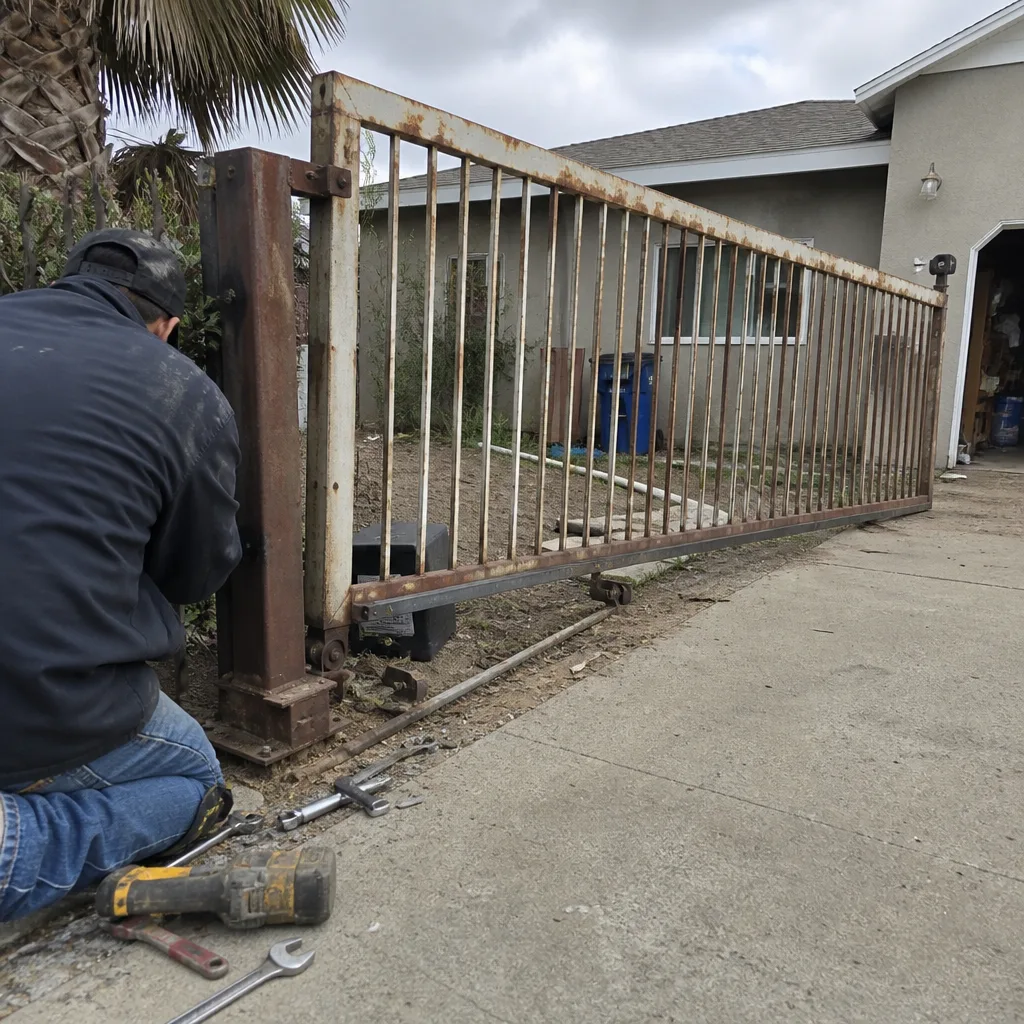 Before
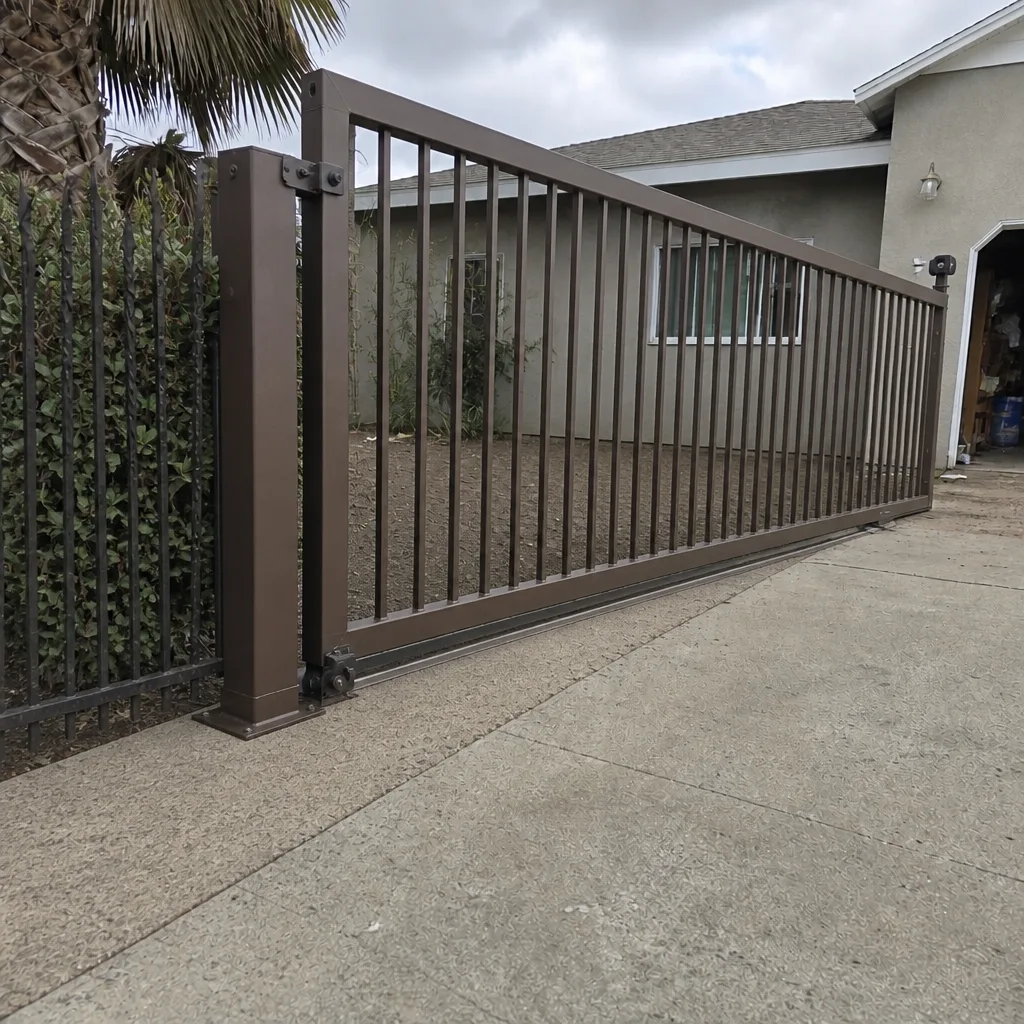 After
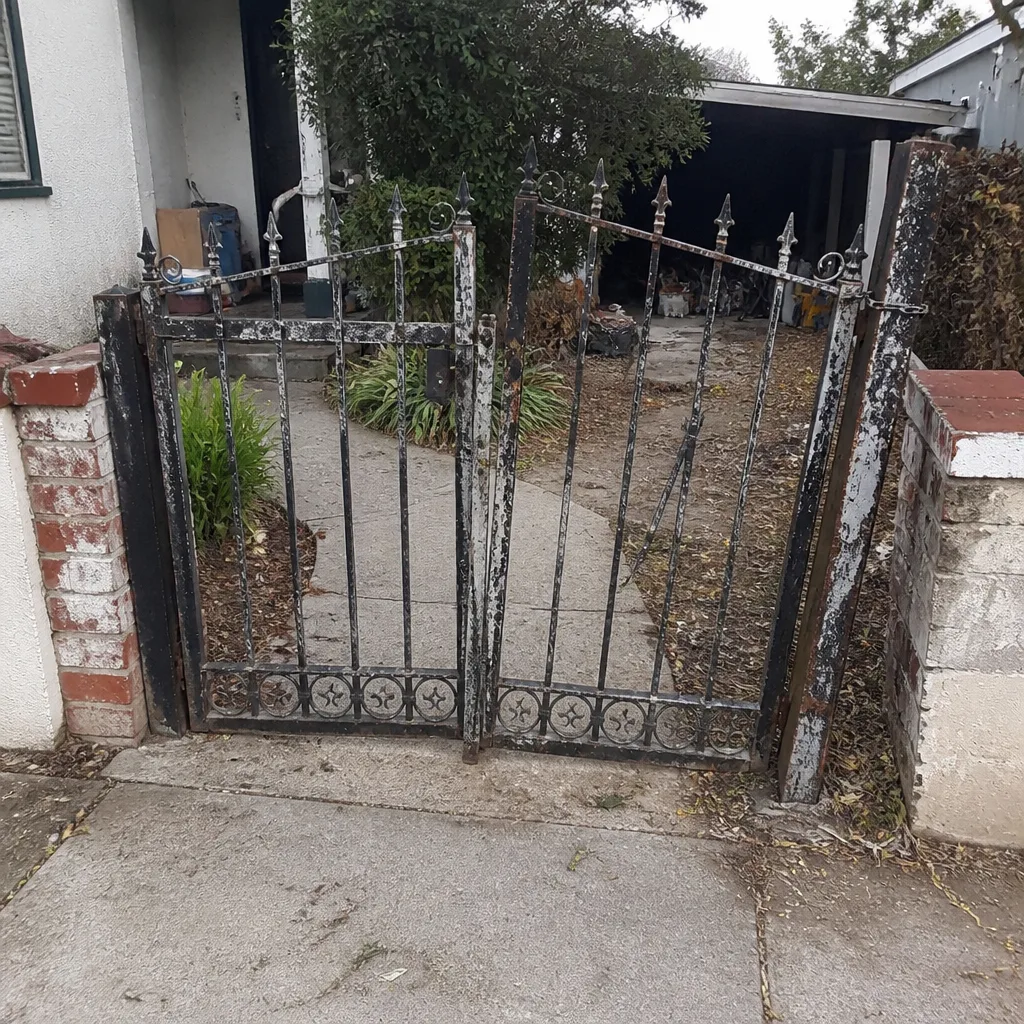 Before
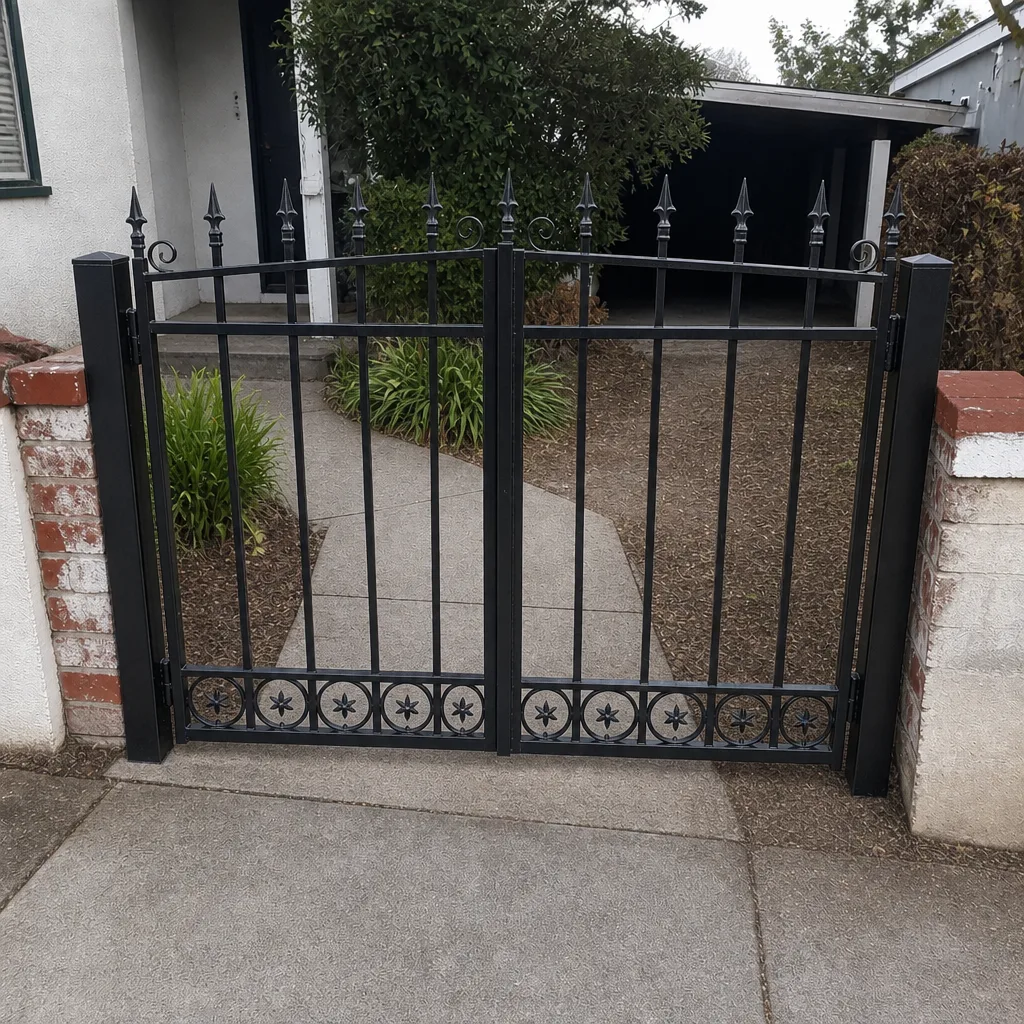 After
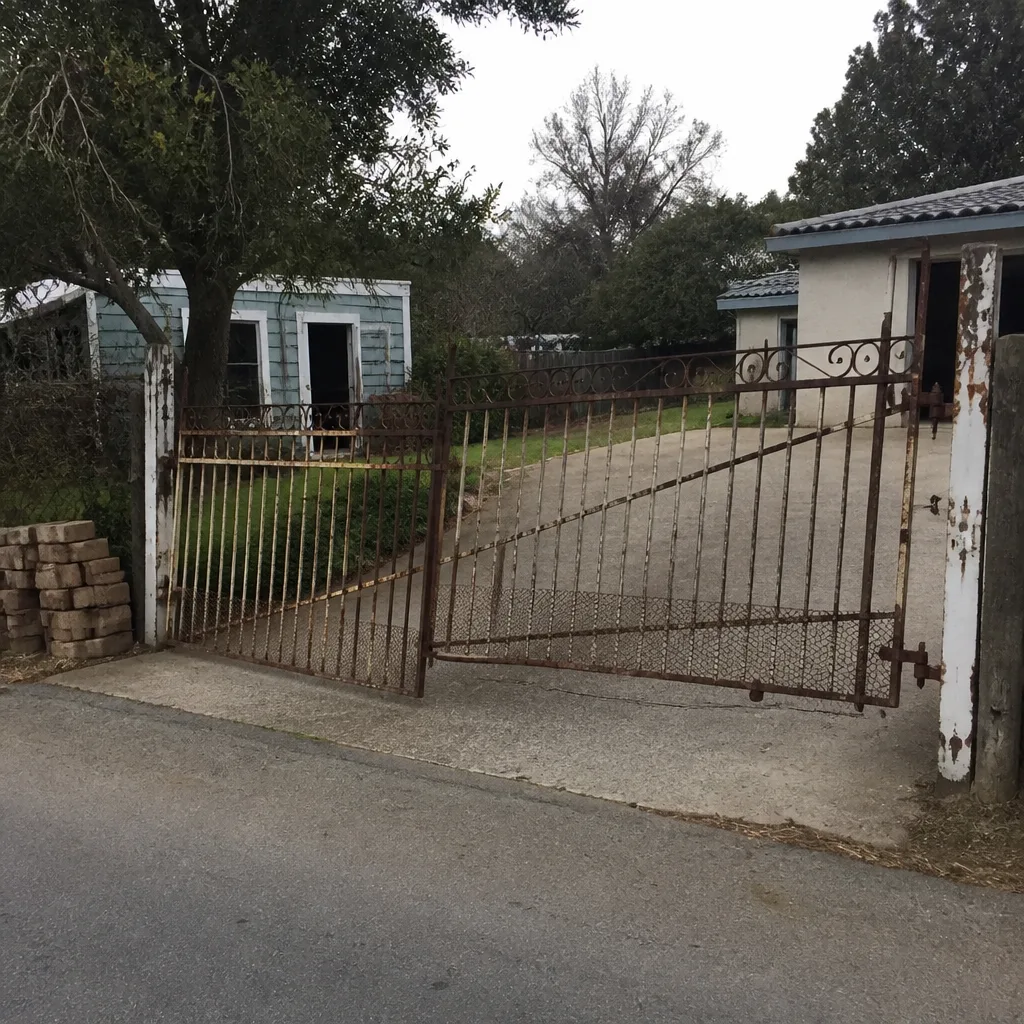 Before
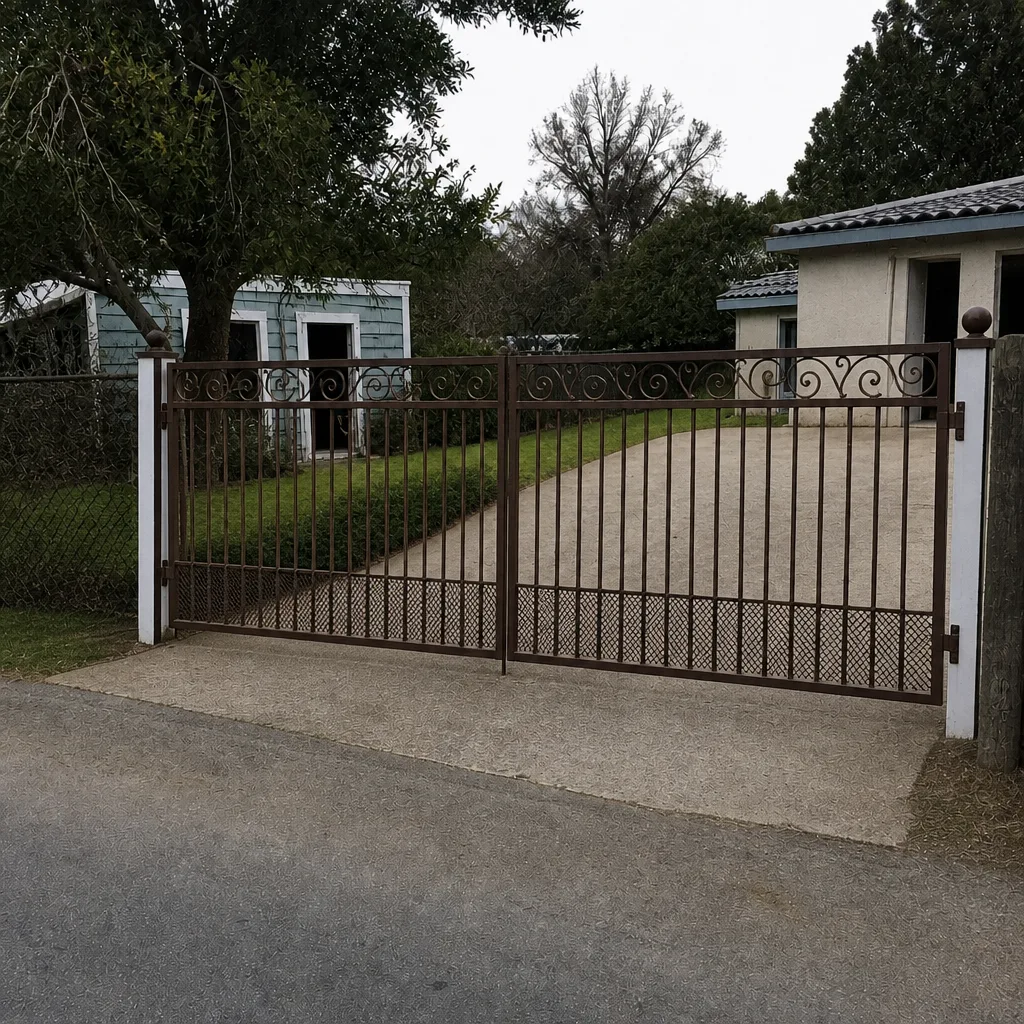 After
When to Call a Professional
Call a gate professional when the gate won’t move at all, when the operator runs but the gate doesn’t, when the gate reverses randomly, when you find moisture in the operator enclosure, or when a repair from a previous technician has failed again. Call when you’re considering a post re-set or a hinge replacement on a heavy gate, and call when your commercial gate needs any work at all. Also call whenever the repair involves power wiring, control board replacement, or safety device adjustment. Gate Repair Salinas offers free estimates in Salinas. Call (888) 704-3384. We answer 24/7, with fast dispatch from 7am to 7pm, Sunday through Friday.
Frequently Asked Questions
Gate repair in Salinas is priced per job after we diagnose the actual failure. A simple hinge or sensor adjustment costs less than a control board replacement or a post re-set, and the written estimate is always provided and agreed before any work starts. Call (888) 704-3384 for a free estimate.
Yes, in most cases same-day repair is available for residential gate failures. We answer the phone 24/7 and dispatch fast from 7am to 7pm, Sunday through Friday. Call (888) 704-3384 and we’ll schedule the earliest opening.
We work on nine gate and operator brands: LiftMaster, FAAC, BFT, Linear, Viking, Ghost Controls, DoorKing, Elite, and Mighty Mule. That covers everything from budget residential operators to commercial systems. If your brand isn’t on the list, call (888) 704-3384 and we’ll confirm before booking.
Repeat failures almost always point to an underlying cause that a previous repair didn’t address: post lean, hinge wear, an out-of-square gate, or a mismatched replacement part. We diagnose the cause first, then repair it. That’s the difference between a fix that holds and one that buys a few months.
Some tasks are safe: cleaning tracks, changing remote batteries, and visual inspection. Anything involving the operator’s power wiring, control board, hinges, safety edges, or a post re-set needs a trained professional. Gate operators and heavy panels carry real injury risk. Call (888) 704-3384 if you’re unsure which category your repair falls into.
Yes, we service residential, HOA, and commercial gates under the same team. Commercial gates often run higher cycle counts and have different safety requirements, but the diagnostic path is the same. Call (888) 704-3384 for a free estimate on any gate type.
The Bottom Line
Most gate failures in Salinas trace back to a simple set of causes: moisture and salt-laden air wearing on hinges, clay soil shifting posts, and mismatched replacement parts left behind by generalist repairs. A true repair targets the cause, not the symptom, and holds. A band-aid buys a few months before the same call returns. If your gate is misbehaving, a proper diagnostic is the first step, and it costs nothing. Call (888) 704-3384 for a free estimate. We answer 24/7, with fast dispatch from 7am to 7pm, Sunday through Friday.
Written by the team at Gate Repair Salinas.