
Last updated November 16, 2026
 Wrought iron
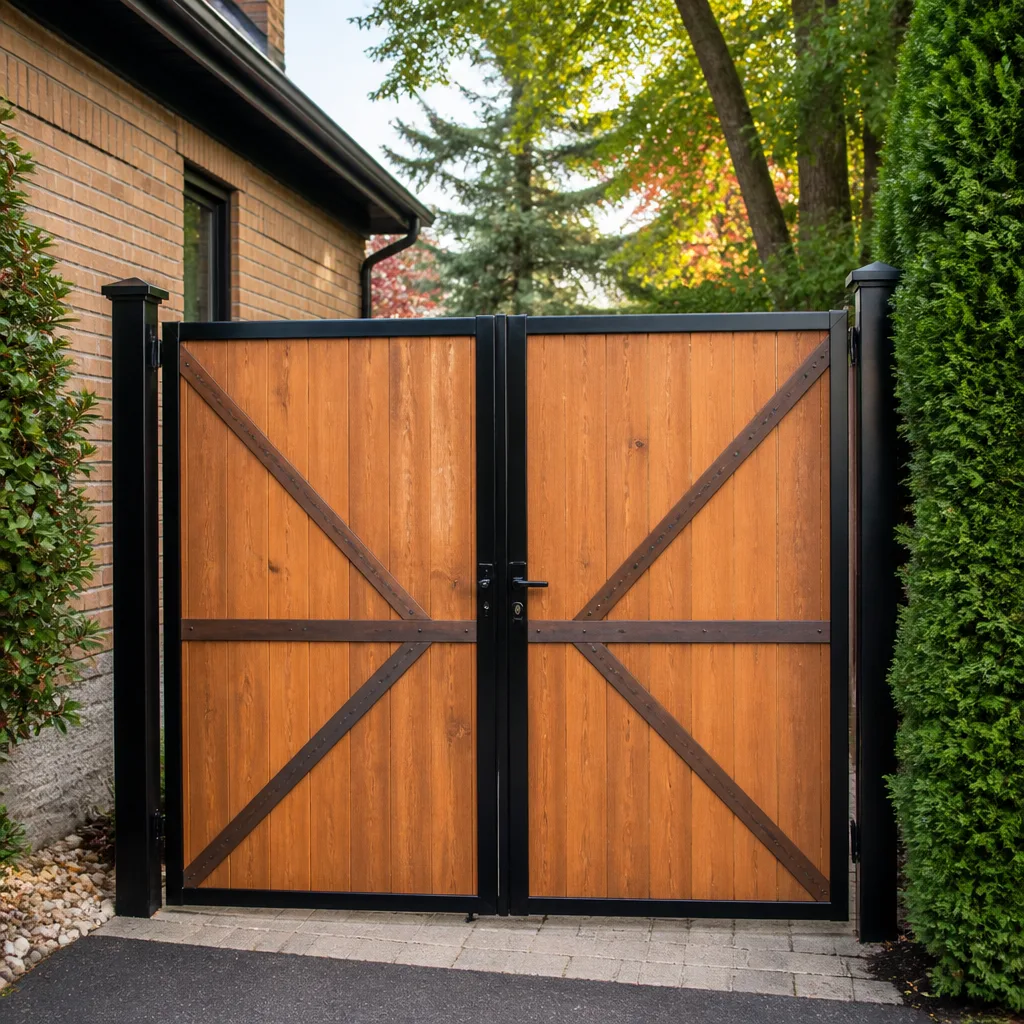 Wood & steel frame
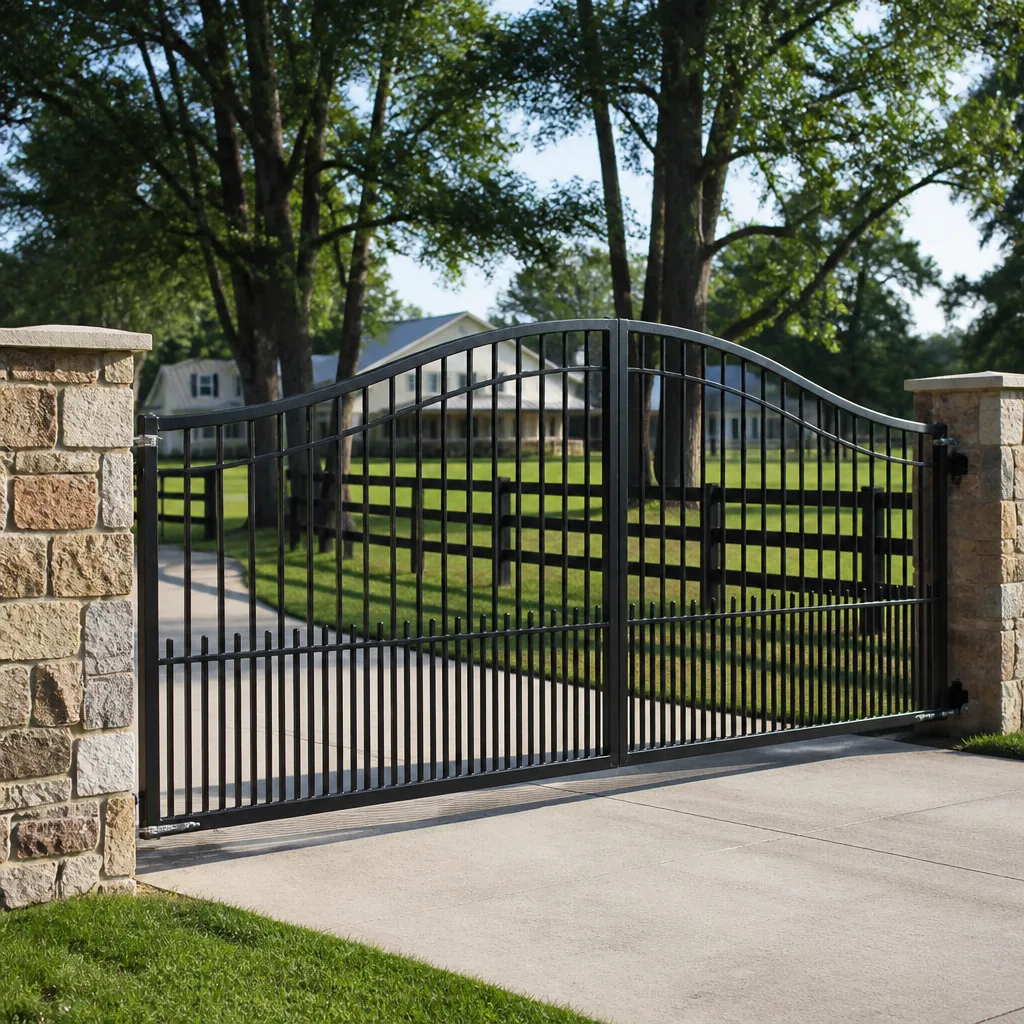 Farm & ranch
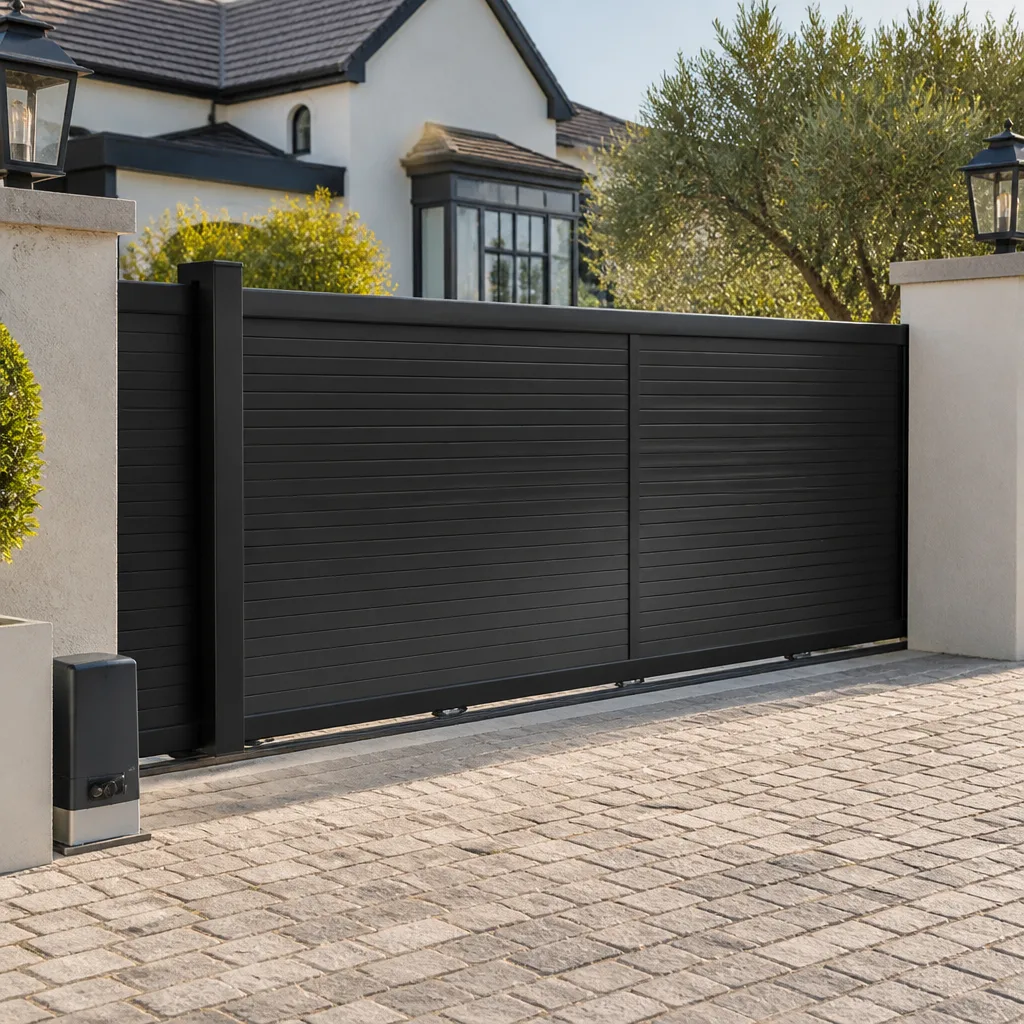 Sliding driveway gates
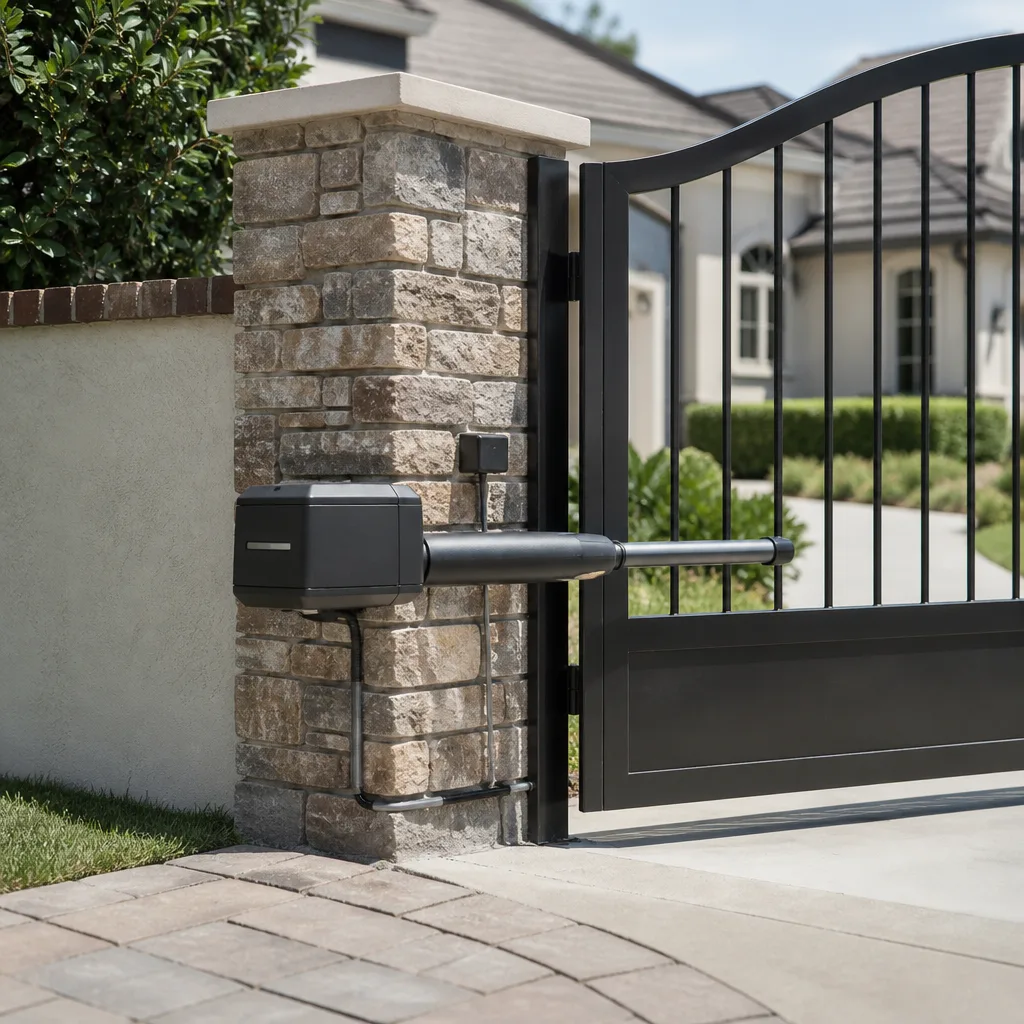 LiftMaster operators
Free on-site gate assessment - hinges, posts, and your LiftMaster or Nice gate operator checked before anything is quoted
The assessment is free and the quote is the invoice.
Get your free estimateSeasonal Gate Repair Care for Salinas: Year-Round Homeowner’s Guide
Most gate advice you’ll read assumes four dramatic seasons: a hard freeze, a thaw, a baking summer. Salinas doesn’t work that way. What we have instead is a long dry stretch, a wet stretch that arrives fast in late fall, and a marine layer that hangs over the valley most mornings, keeping surfaces damp even in months when nothing falls from the sky. That mix stresses gate hardware on a schedule you can actually plan around. The dry season doesn’t rest your gate; it bakes exposed rubber seals, dries wooden panels, and thins out lubricant on chain drives faster than most operators expect. This guide walks the full year of gate care in Salinas, task by task, so a slow-wearing part gets handled before it becomes a stuck gate.
Quick Answer
Seasonal gate care in Salinas follows three anchors: prep drainage, seals, and battery backup before the fall rains; re-check post alignment, tracks, and corrosion spots in mid-wet season; then step up lubrication and seal conditioning through the dry months. On top of that sits a year-round routine for the marine layer, mainly inspecting exposed electrical connections monthly. Do those four things and you’ll catch most failures while they’re still cheap to fix.
Styles & brands we work with
- Wrought iron
- Wood & steel frame
- Farm & ranch
- Sliding driveway gates
- LiftMaster operators
Table of Contents
- Why Salinas Gates Age on an Unusual Schedule
- Before the Rains: October Prep Tasks
- Mid-Wet-Season Check: January Re-Measurement
- Dry-Season Tasks: June Through September
- The Marine Layer Protocol: A Monthly Habit
- How to Adjust Limit Switches as the Soil Moves
- Brand-Matched Care: LiftMaster, FAAC, BFT, and Linear
- Signs Your Gate Needs Repair Now
Why Salinas Gates Age on an Unusual Schedule
A gate in Salinas wears differently than one in a place with real winters. There’s no freeze to crack a footing open, and snow load never enters the conversation. The pressure comes from two directions instead. First, an extended dry season that removes moisture from wood and rubber while dust settles into tracks and hinges. Second, a wet season where the ground under the posts softens and shifts, and repeated wet-dry cycling works on every seal and joint.
Then there’s the marine layer. Morning moisture settles on metal, sits in junction boxes that aren’t sealed tight, and creeps into the small gaps around limit switches. It’s not dramatic, and it’s not the same as salt air or coastal spray. It’s simply damp, over and over, and repeated dampness is what drives surface corrosion and electrical gremlins in an automated gate system.
Put together, your automated gate in Salinas sees roughly three stress periods a year, each with its own list of likely failures:
- Late fall rain onset: water reaching operator housings, drainage backing up around footings, backup batteries that sat all summer without a load test.
- Mid-wet season: soil movement under posts, debris washing into wheel tracks, small corrosion spots getting a foothold.
- Dry season: rubber seals hardening, wooden panels drying and warping, chain and belt drives running under-lubricated.
The point of a seasonal calendar is simple. You deal with each stress period’s problems before that period arrives, while the fix is a tightening or a cleaning rather than a repair.
Before the Rains: October Prep Tasks
The month before the wet season is the single highest-value block of gate maintenance in Salinas. Three tasks carry most of the weight: drainage, operator housing seals, and the battery backup. Get these done in October and you’ll skip a large share of the November-through-December service calls that come from a gate that got water where it shouldn’t.
Drainage around post footings
Walk the full run of the gate and look at where each post meets the ground. Water pooling there is normal in winter, but water that stays pooled softens the soil that holds your posts plumb. Clear leaves, soil, and debris from any low spot near a footing, and check that runoff has a path away from the gate rather than toward it. On a sloping driveway, that may mean re-grading a strip of planting bed or adding a small swale. If the ground already dips against a post, fix that now, before it’s holding standing water.
Operator housing seal inspection
Open the operator housing and look at the gasket, the cable entry points, and the cover screws. Seals that are cracked, flattened, or missing let water into a controller that was never designed to sit in a puddle. Wipe the mating surfaces clean and confirm the cover seals tight when closed. On sliding-gate operators, also check the small weep holes at the bottom of the housing; a blocked weep hole turns the housing into a shallow tub.
Battery backup load test
A backup battery that’s sat through the dry season can read full voltage and still fail under load. Run a load test the way the operator’s manual describes it, and replace any battery that doesn’t hold. This matters most on gates that get daily use; a dead backup shows up the first time power blips, and you’ll be the one out in the rain with a gate stuck halfway.
October checklist
- Clear debris and pooled water from around every post footing.
- Inspect and reseat the operator housing gasket and cable entries.
- Clear weep holes on sliding-gate operator housings.
- Load-test the battery backup and replace if weak.
- Lubricate chain and hinge points before the wet season, not after.
- Test all safety edges, photoelectric sensors, and the manual release.
Mid-Wet-Season Check: January Re-Measurement
By January the ground in Salinas has had a couple of months of rain. That’s when a gate that was perfectly aligned in October can develop a droop, a scrape, or a hung-up wheel. The soil under a post doesn’t fail outright; it shifts slightly, and a post that’s off by a quarter inch at the base is off by much more at the top of a swing gate. This is the season to check alignment rather than assume it.
Three January tasks cover most of what matters:
- Re-measure gate travel and plumb. Check the gate’s height and gap at the closed position, and whether it still sits level. A small droop that’s new since the fall points to settling under a post or a worn hinge.
- Clear wheel tracks and the swing path. Wet-season debris (leaves, gravel, mud) drops into the track of a sliding gate or under the wheels of a cantilever gate. Clear it before it gets ground into the hardware.
- Treat corrosion spots early. Look at the hinge pivot points, the operator mount, and any bare or painted metal where a spot of surface rust has appeared. A light touch-up now keeps a cosmetic spot from becoming a part replacement.
We see the same pattern every wet season: an owner waits for the gate to scrape the ground before calling, by which point a settling post is affecting the operator and the limit switches too. The cheap version of this repair is a January alignment check. The expensive version is a February call about a gate that won’t close.
Dry-Season Tasks: June Through September
Salinas summers do their own damage, just more quietly than winter. The long dry stretch pulls moisture from rubber and wood, and it thins or gums up lubricant on any exposed drive. What you’re guarding against is a gate that still works in July and fails in September because a seal dried out or a chain went dry.
Rubber seal conditioning
Every gate with rubber components has some: the operator housing gasket, bumper stops, seal strips on the gate frame, hinge bushings. Through the dry months these harden and shrink. A rubber-safe conditioner applied a few times through the summer keeps them flexible. Don’t use a general-purpose oil or a petroleum product on rubber; it accelerates the cracking you’re trying to prevent. Clean the surface first, then apply a thin coat and let it absorb.
Chain and belt lubrication
Dry heat cooks lubricant off a chain drive faster than most operators are set up to tolerate. Through June to September, increase your lubrication interval over what you run in the wet season. On a chain-drive sliding gate, that might mean checking more often rather than on a relaxed schedule. On belt-driven swing operators, check for glazing and tension. A dry chain wears quickly, and it’s noisy before it fails, so listen for it.
Wood panel moisture check
A wooden gate panel that dries out through the summer will warp, cup, and pull at its fasteners. Run a hand along the panels and check for gaps opening between boards, bowing, or a fastener head that’s started to sit proud. A moisture check with a simple meter tells you whether the wood is drying past where it should. Catching it early lets you seal and re-clamp; catching it late means a panel replacement.
We work on electric and automated gates of every kind, and the dry-season failures we see aren’t usually motor failures. They’re the slow ones: a dried seal that let dust into a bushing, a chain that stretched because it ran dry, a wooden panel that warped and started dragging on the operator. When you need electric gate repair in the middle of summer, it’s often a downstream effect of a lubrication or seal task that didn’t happen in June.
The Marine Layer Protocol: A Monthly Habit
The marine layer is the piece most seasonal guides skip, and in Salinas it’s the one that runs year-round. Morning moisture that settles on exposed metal doesn’t need a storm to do damage. It needs repetition, and repetition is what it gets. The protocol is simple: a monthly inspection of every exposed electrical connection on the gate system, with the covers off.
What to check every month
- Open the junction boxes where the power, controls, and sensor wiring come together. Look for moisture, condensation, or a rusted terminal.
- Check the gasket or seal on each box; a box that isn’t sealed is where the moisture gets in. Confirm the cover seals tight.
- Inspect terminal screws for corrosion and for looseness. A loose terminal is a false signal to the control board, and moisture makes it worse.
- Look at the operator’s low-voltage wiring where it enters the housing, and check any splice or connector that sits exposed.
- Check the safety sensors and their connections; a moist, dirty lens or a corroded sensor connector is a common cause of a gate that reverses for no reason.
- Look at the control board for signs of damp; a controller that keeps tripping usually has moisture somewhere upstream.
This monthly walk-through is where a lot of gate repair gets prevented rather than performed. It takes a few minutes. It also catches the small corrosion that would otherwise turn into a control board fault, and control board faults are the repairs owners most often describe as coming out of nowhere.
Who this matters most for
If your gate has an intercom, a keypad, or a vehicle sensor in its system, those low-voltage runs are the most moisture-sensitive parts of the whole setup. DoorKing entry systems, for example, are built for access-control work, but even the best-built system relies on sealed connections to keep functioning through a damp season. Homes in the neighborhoods that sit closer to the marine layer’s reach see this most; it’s worth putting the monthly connection check on a calendar if you rely on your gate every day.
How to Adjust Limit Switches as the Soil Moves
A limit switch tells the operator where the gate’s open and closed positions are. When the ground moves under a post, the gate’s actual travel changes, and the settings the operator was last adjusted to stop matching where the gate really is. The result is a gate that stops short, over-travels, or reverses mid-cycle. In Salinas, soil movement through the wet season is the most common reason the limit settings need revisiting.
Here’s the general order of operations a technician follows:
- Confirm the mechanical first. Check hinges, rollers, tracks, and post plumb before touching limit settings. Adjusting limits on a gate that’s physically dragging just hides the real problem.
- Run the gate to both extremes by hand (with the operator disengaged) and note where it naturally stops.
- Set the closed limit so the gate stops in full contact with the post or stop, without the operator straining against it.
- Set the open limit so the gate stops cleanly at its fully open position with no over-travel.
- Test the reversing and safety functions after any adjustment; limits and safety edges work together.
- Record the settings so the next adjustment has a starting point to compare against.
Limit switches on a modern operator are a small part of the system, but where they are and how to adjust them depends heavily on the brand. A LiftMaster swing operator and a FAAC sliding operator use different limit designs and different adjustment procedures. That’s why we match our work to the specific make and model on your property, rather than running every gate through one set of instructions. On many automated systems, limit adjustment is also tied into the safety-edge logic; get it wrong and a gate will close and then immediately reverse, or worse, fail to reverse when it should.
This is a genuine safety component. On a swing gate that weighs more than a person can stop, a bad limit setting means the gate is hitting something it shouldn’t or failing to detect a vehicle or a person in its path. If the gate is over-traveling or reversing for no clear reason, don’t keep working at the setting until the mechanical alignment is checked by someone who knows the operator. A mistaken adjustment can leave the gate in a state that’s worse than when it started.
Brand-Matched Care: LiftMaster, FAAC, BFT, and Linear
Most of the care in this guide applies to any automated gate. But the specifics, where the limits live, what kind of battery backup the system uses, how the control board handles a moisture fault, how seals are located, depend on the operator. We work on nine gate and operator brands: LiftMaster, FAAC, BFT, Linear, Viking, Ghost Controls, DoorKing, Elite, and Mighty Mule. That range matters because a residential swing gate and a commercial sliding gate sit in different systems, and the care that keeps each one healthy isn’t identical.
Here’s how the seasonal calendar tends to land in practice:
- LiftMaster operators are common on residential swing and slide gates. Their battery backup and control board are the parts most often affected by a missing load test or a moisture fault, so the October and monthly checks are the priority.
- FAAC systems frequently appear on heavier sliding gates. Their chain drives and limit setups reward the dry-season lubrication and limit-check habits in this guide.
- BFT operators turn up on a lot of automated gates across both residential and commercial settings. The seal and connection checks are where most of the seasonal maintenance pays off.
- Linear and the rest of the range each have their own service points, and an operator that’s been pushed outside its factory setup by local conditions works better when the technician knows the brand.
A gate-only specialist sees the same systems across a lot of properties, which is how a seasonal calendar like this one gets tuned. We’ve watched moisture faults, settling posts, and dried-out drives follow a recognizable cycle in Salinas, and the tasks in this guide are the ones that most reliably keep a repair ahead of the failure. When a brand-matched fix is what’s needed, a Salinas gate specialist who knows your operator is worth more than a generalist with a wrench.
Signs Your Gate Needs Repair Now
Seasonal care catches most issues early, but some symptoms are a call now rather than a task for next month. A gate that’s been working fine and suddenly isn’t is telling you something changed, and in an automated system the cause could be mechanical, electrical, or both. Here’s the short list of symptoms we’d not wait on:
- The gate reverses mid-cycle or fails to reverse when something is in its path; that’s a safety function, not a convenience issue.
- The operator hums, clicks, or trips repeatedly without moving the gate.
- A post has visibly leaned or a gate has dropped enough to scrape.
- The chain has come off the sprocket or is visibly slack.
- The gate stops short of the closed or open position, or over-travels.
- The keypad, intercom, or remote has stopped working while the gate itself still opens with the manual release.
- You’ve found water in the operator housing or a junction box; don’t wait to find out how much.
Some of these are more serious than others. A dead remote is a quick fix. A gate not reversing on an obstruction is not; treat that as a stop-and-call condition and don’t leave the gate in service while you figure it out. A gate is a heavy moving object with an operator that’s meant to stop it without hurting anyone in its path, and any malfunction in that side of the system gets handled by someone who knows the hardware.
Common Mistakes to Avoid
- Treating the dry season as a rest period. Salinas summers bake seals, dry out wooden panels, and strip lubricant from chain drives. The gate may still be working in September, but it’s been wearing the whole time.
- Adjusting limit switches before checking the mechanics. If a post has settled or a hinge is worn, resetting the limit just masks the real problem and the gate keeps drifting out of adjustment.
- Using general-purpose oil on rubber seals. Petroleum-based products accelerate the cracking. Use a rubber-safe conditioner, and clean the surface first.
- Skipping the battery load test. A backup battery can read full voltage and fail under load. Test it before the wet season, not after the first power blip.
- Waiting for a scrape before addressing a droop. A gate that’s just starting to scrape is usually a settling post or a worn hinge; letting it run adds wear to the operator and the limit setup.
- Ignoring moisture in exposed junction boxes. The marine layer puts dampness into every loose cover, and a corroded terminal is one of the most common causes of a control board fault in Salinas.
- Pushing a gate with a safety malfunction “just until it’s convenient.” A gate that won’t reverse on an obstruction is a hazard, not an inconvenience. Get it looked at before the next household member uses it.
See the difference
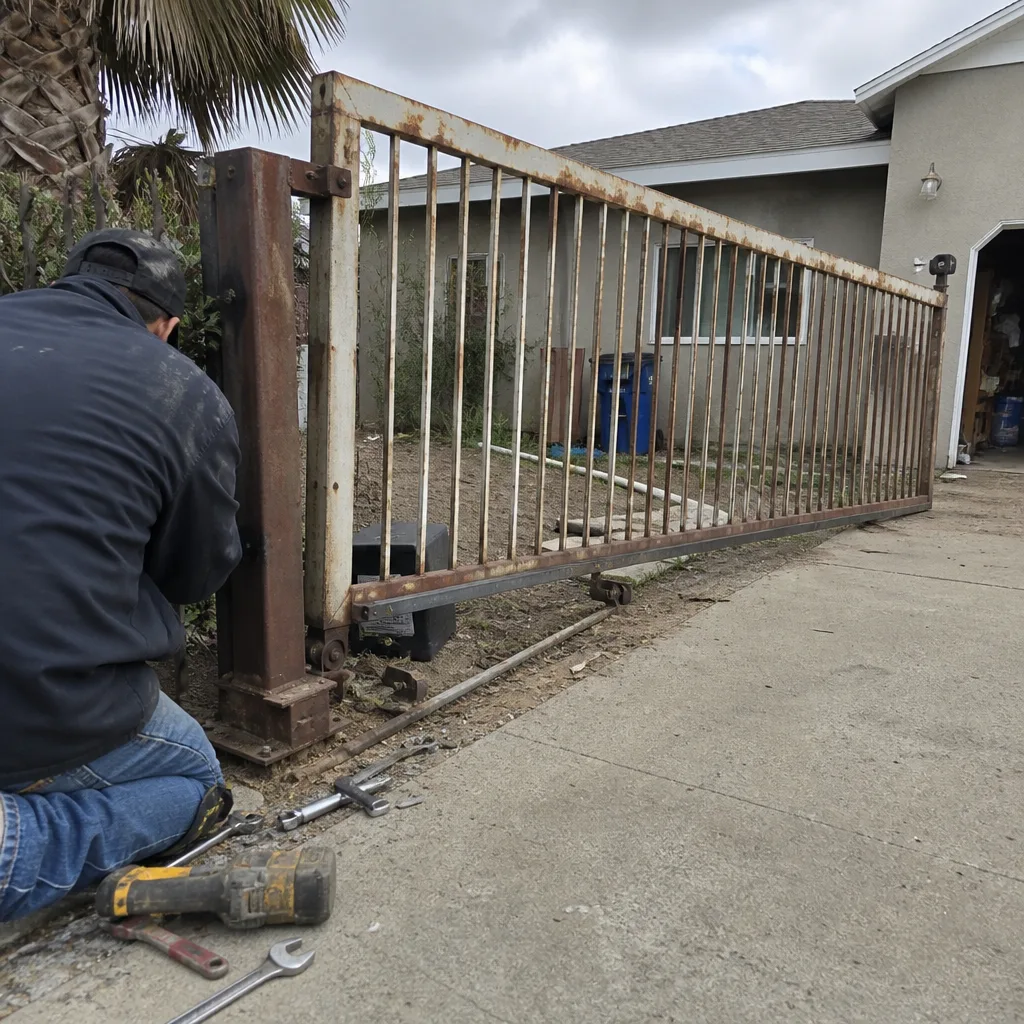 Before
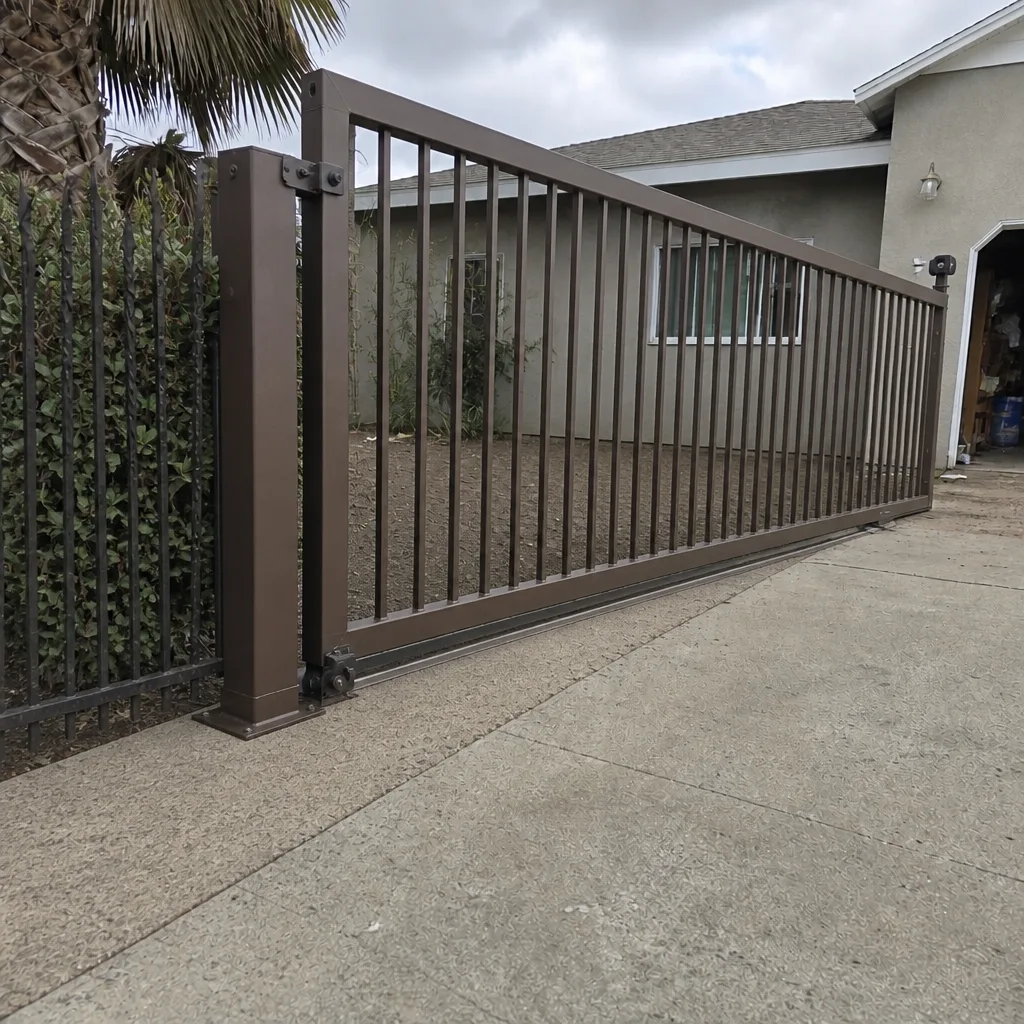 After
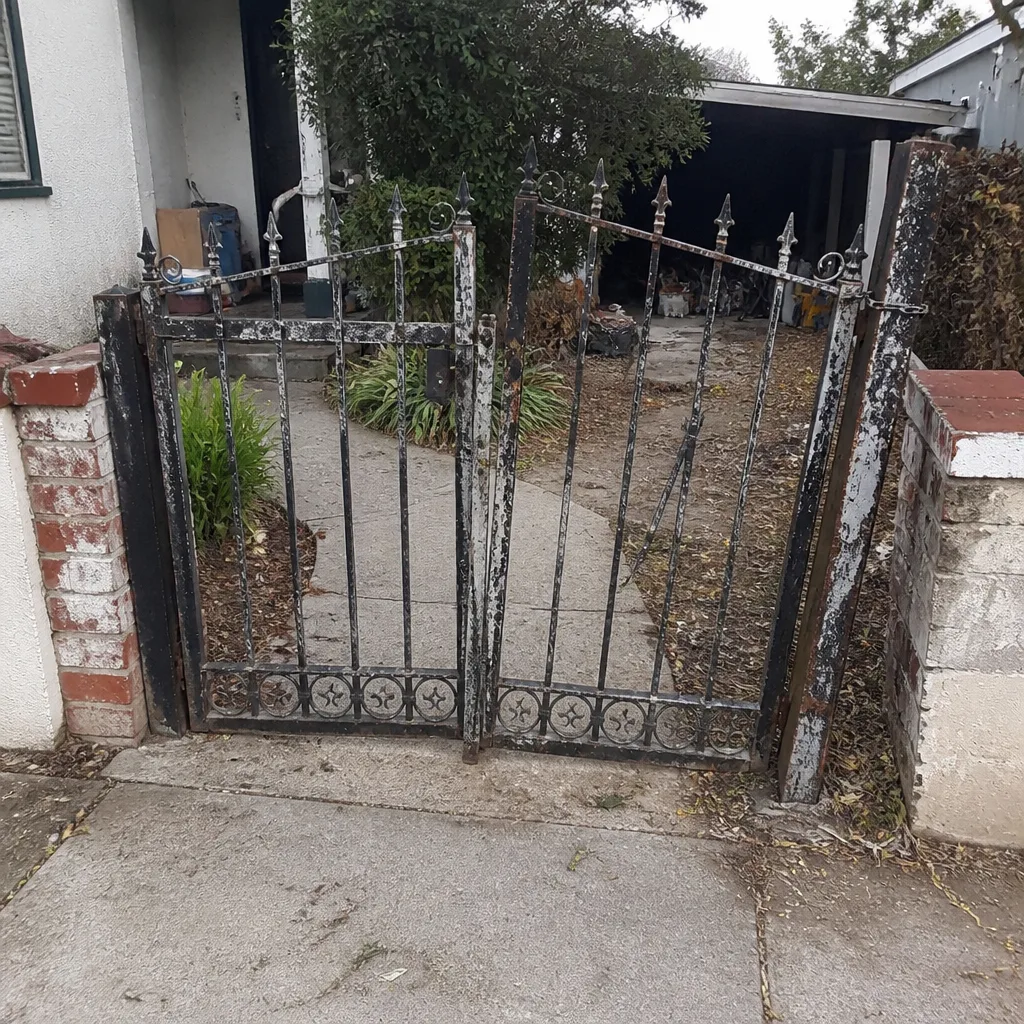 Before
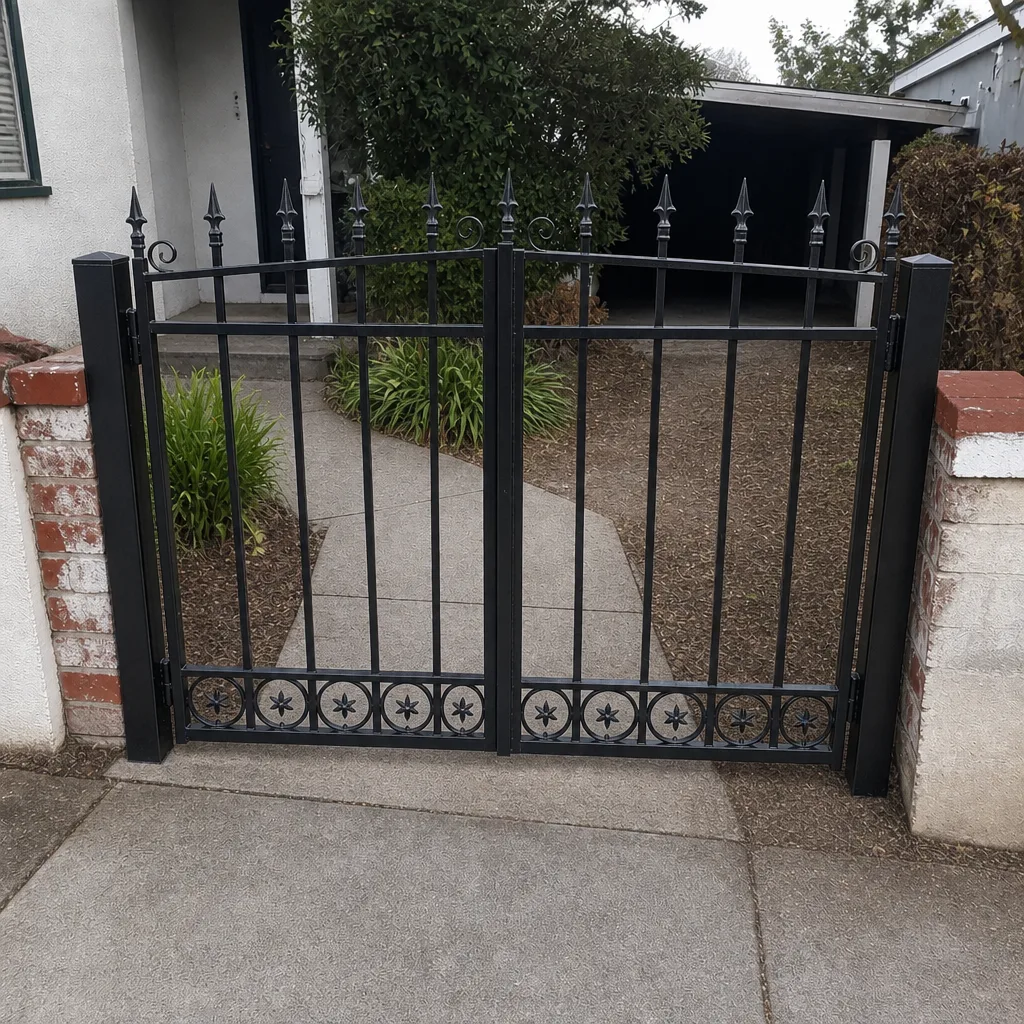 After
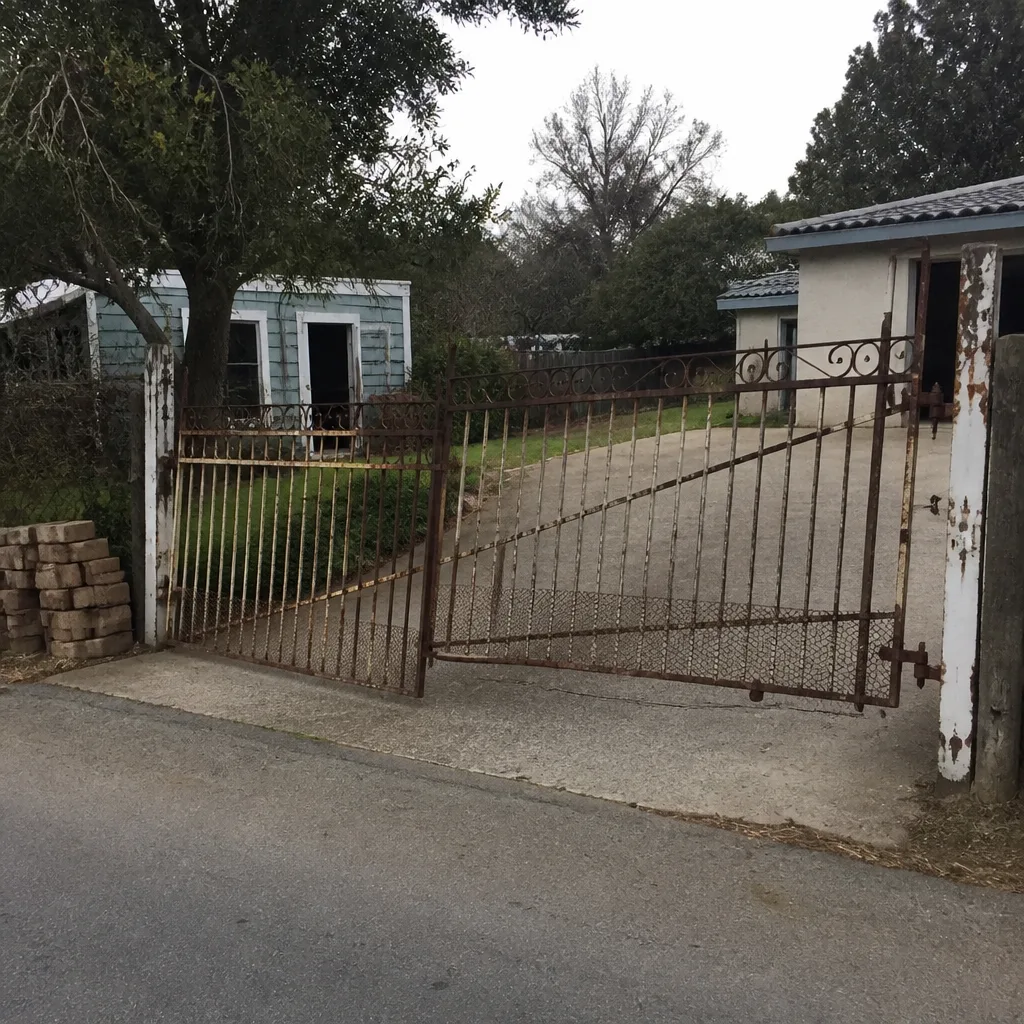 Before
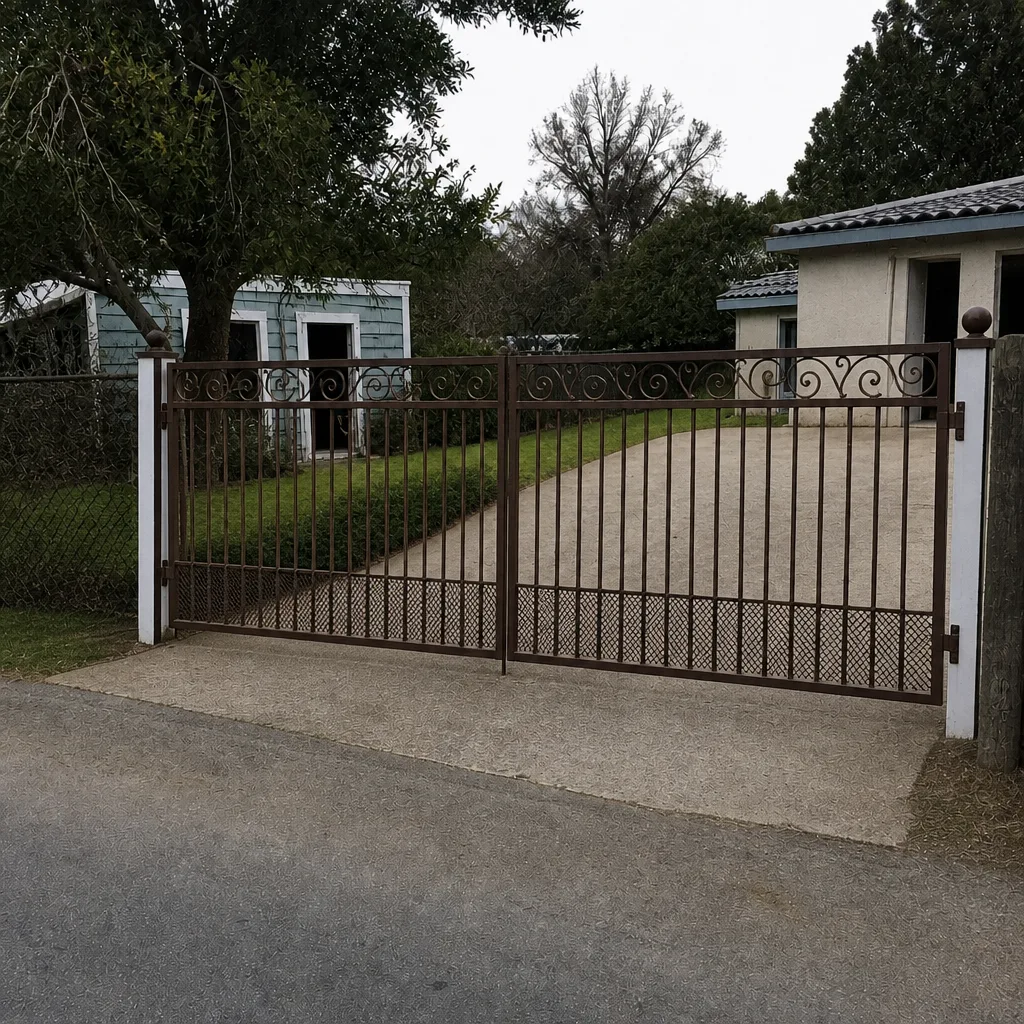 After
When to Call a Professional
Seasonal care is something a homeowner can handle for the visible, low-risk tasks: clearing a wheel track, wiping a seal, checking a battery. Where it becomes a call is the moment the symptom points inside the operator, the wiring, a safety function, or a settling post. A gate that’s dropping, hitting, reversing, or tripping its controller needs a technician who knows the brand and the mechanical setup. Limit-switch adjustment, moisture faults in the control board, a chain that’s come off, and any safety-edge issue all belong with a specialist. If your gate’s symptoms match anything on the list in this guide and you’d rather not guess, Gate Repair Salinas offers free estimates in Salinas. We answer 24/7 and provide fast dispatch from 7am to 7pm, Sunday through Friday, so call (888) 704-3384 and we’ll take a look.
Frequently Asked Questions
Salinas gates need three seasonal anchors plus one year-round habit: October prep for drainage, operator seals, and battery backup; a January re-measurement for soil movement, track debris, and corrosion; dry-season attention to seals, lubrication, and wood panel moisture; and a monthly check of exposed electrical connections for the marine layer. Each anchor is a short visit, and together they catch most failures while they’re still cheap to fix.
October is the ideal month for rainy-season prep. Water pooling at post footings, a dried-out operator housing gasket, and a weak backup battery all show up as failures once the rain starts, and each is a quick fix in the dry season. Doing the work a month ahead of the first rain gives you time to re-test everything before it’s needed.
Yes, it’s common on gates with a settling post or a gate built on soil that moves with the wet season. The gate’s actual travel can change as the ground shifts, and the operator’s limit settings stop matching where the gate really is. A January alignment check tells you whether limits need revisiting; don’t adjust them until the mechanical side is confirmed.
The wet season in Salinas brings two things at once: wetter soil that moves the posts, and more moisture in exposed electrical connections. Together they produce drooping gates, scraping wheels, and sensors that misfire. Most of what we see in January traces back to one of those two causes rather than a motor failure.
Yes. The long dry season pulls moisture from wood, and a wooden panel that dries too far can warp, cup, or pull at its fasteners. A quick moisture check with a meter in early summer tells you whether the panel needs sealing. Catching it early lets you seal and re-clamp instead of replacing a panel.
Call a gate-specific technician, not a general contractor. A gate that won’t close or won’t reverse on an obstruction is a safety problem, and it needs someone who knows the operator, the safety-edge logic, and the mechanical setup. Call (888) 704-3384. We answer 24/7 and provide fast dispatch from 7am to 7pm, Sunday through Friday, and estimates are free.
The Bottom Line
A Salinas gate ages on a schedule you can plan around. The dry season dries your seals, wood, and drive lubricant; the wet season moves your posts and puts moisture in your connections; and the marine layer keeps the connections damp the rest of the year. Do the October prep, the January re-measurement, the dry-season lubrication and seal conditioning, and the monthly connection check, and most of what would become a repair stays a maintenance task. When a gate drops, scrapes, reverses, or trips its operator, that’s a call for a gate-only specialist with the right brand knowledge. Estimates are free. Call (888) 704-3384 to set one up.
Written by the team at Gate Repair Salinas.