
Last updated November 16, 2026
 Wrought iron
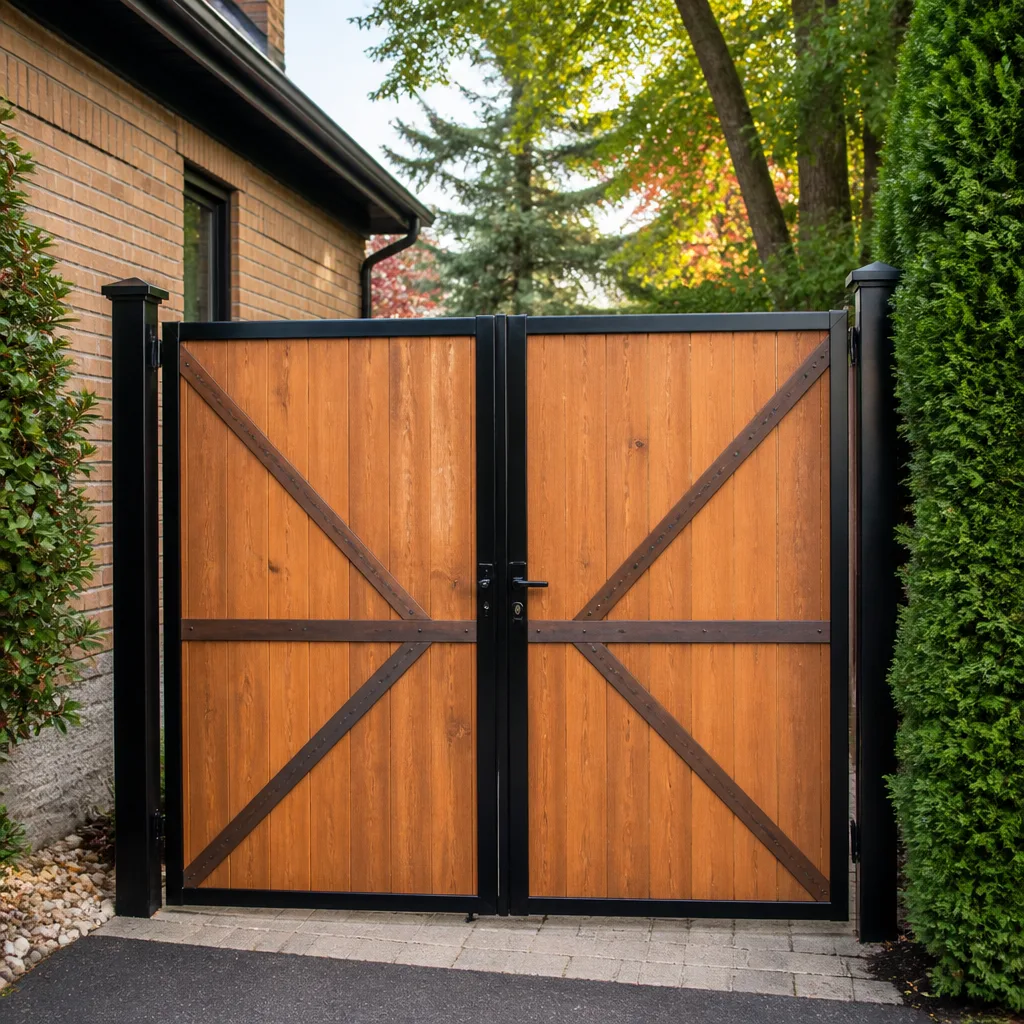 Wood & steel frame
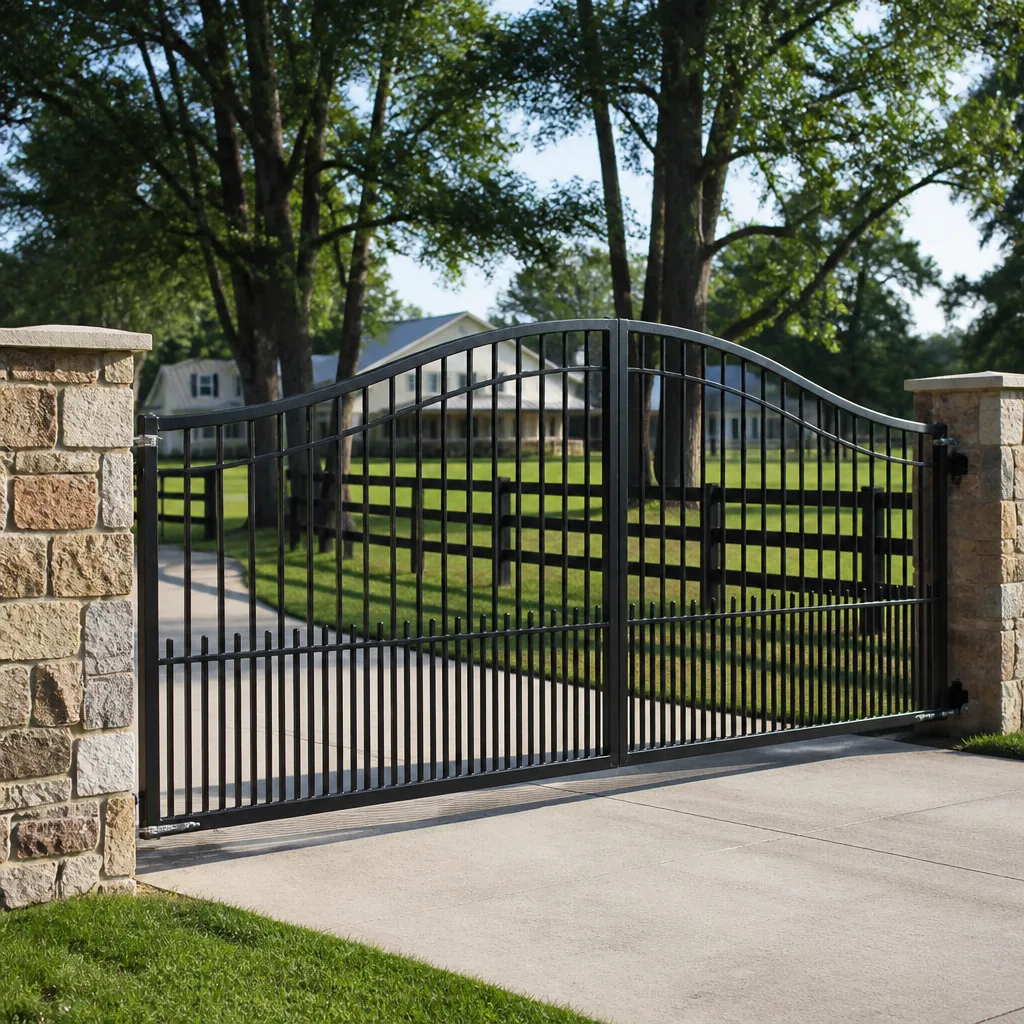 Farm & ranch
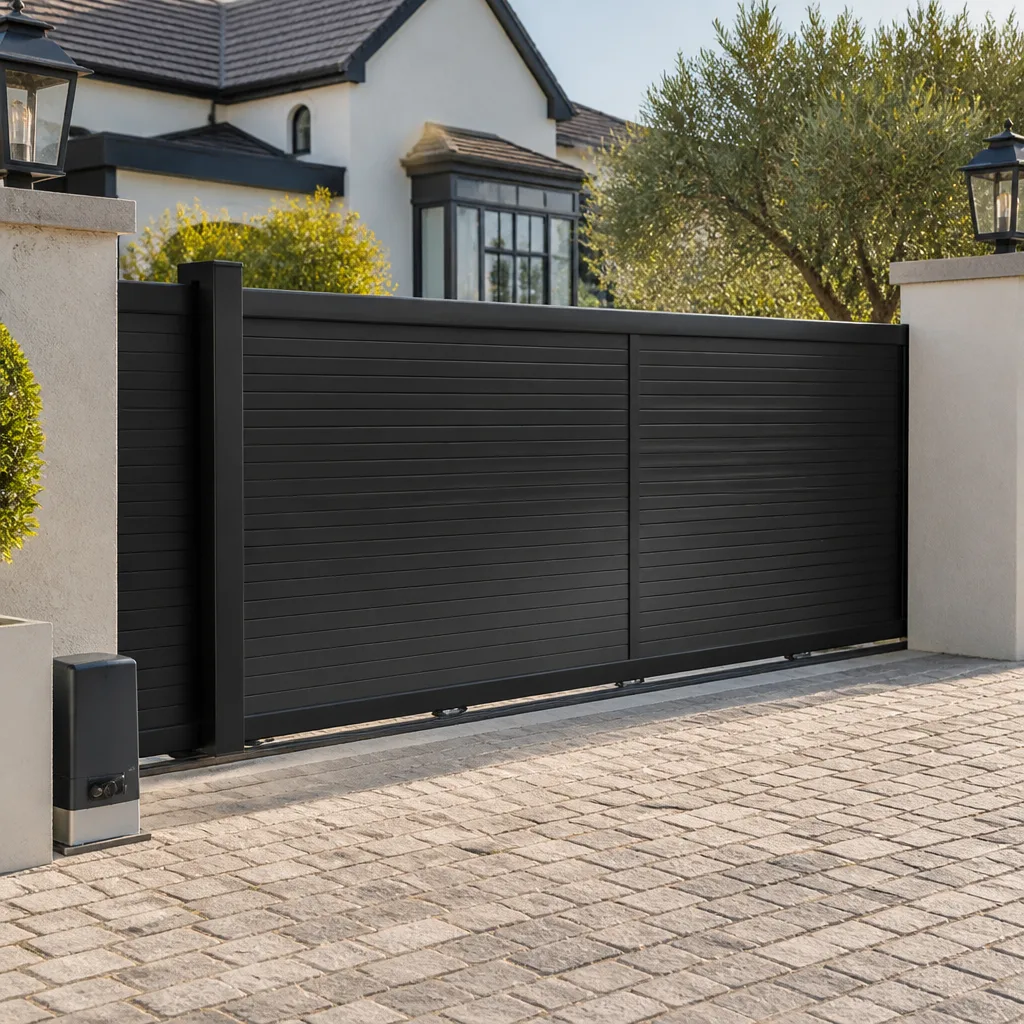 Sliding driveway gates
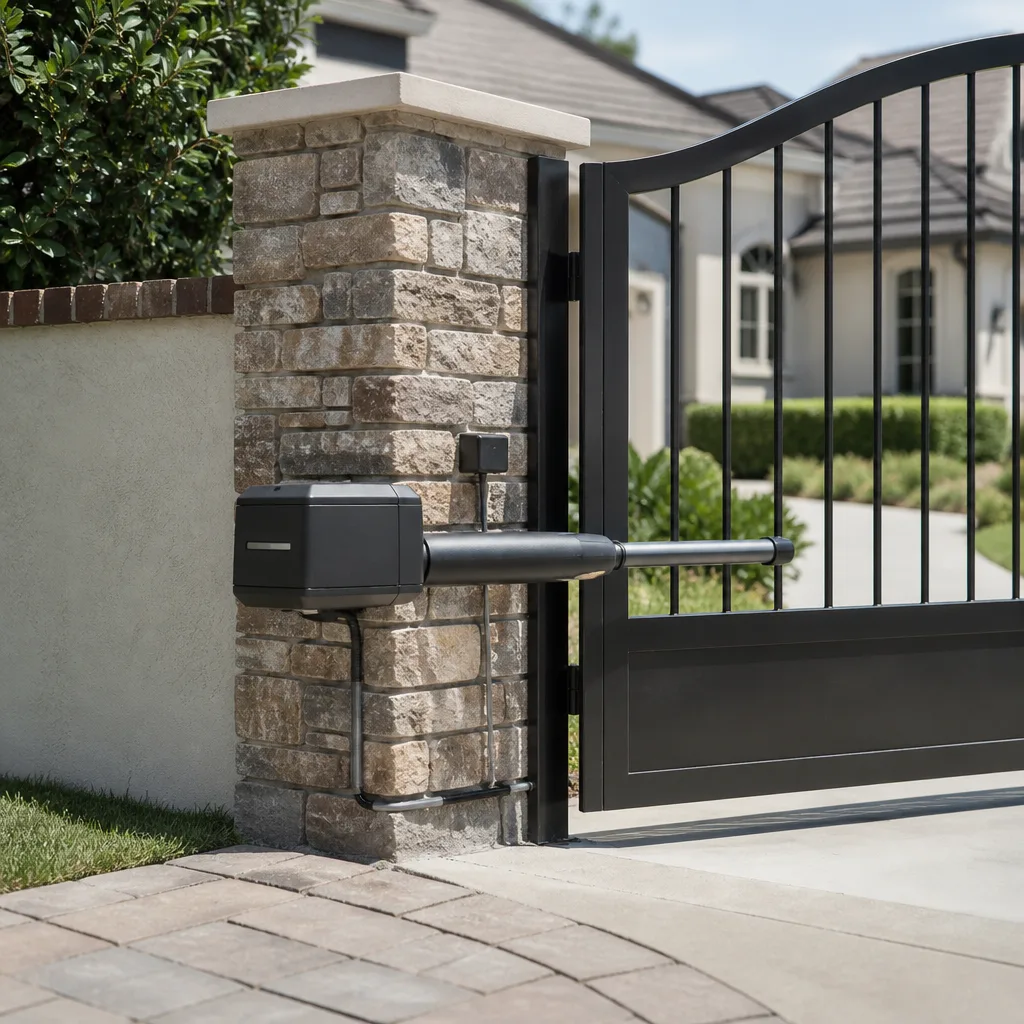 LiftMaster operators
Free on-site gate assessment - hinges, posts, and your LiftMaster or Nice gate operator checked before anything is quoted
The assessment is free and the quote is the invoice.
Get your free estimateGate Repair Permits, Codes & Inspections in Salinas, CA: What You Need to Know
Here’s the part most gate owners get wrong: a homeowner’s policy doesn’t care that your gate opens. It cares that it stops when it’s supposed to. In California, an automated gate operator is treated as a safety device, and when an operator gets swapped or a gate opening gets modified without the required entrapment protection, an injury claim can land on you rather than your insurance carrier. This guide explains when a City of Salinas building permit is actually triggered, what California code expects of your safety edges and photo eyes, where HOA approval sits separately, what an inspector looks for, and how to bring an older Salinas gate system into compliance without tearing it out.
Quick Answer
In Salinas, swapping a gate operator in kind, repairing a motor or control board, or replacing a hinge or roller generally does not require a building permit, while new gate installation, changes to the opening or structural posts, and new electrical work for an operator usually do. California also requires automated gates to have UL 325 entrapment protection, meaning photo eyes or safety edges that stop and reverse the gate, and a replaced operator that lacks them can void your insurance coverage for a gate-related injury. Always confirm the current requirement with the City of Salinas building department before work begins, because the final call belongs to your local inspector.
Styles & brands we work with
- Wrought iron
- Wood & steel frame
- Farm & ranch
- Sliding driveway gates
- LiftMaster operators
Table of Contents
- Does a gate repair in Salinas need a building permit?
- What California requires: UL 325 entrapment protection explained
- HOA approval in Salinas: the second layer of rules
- What a Salinas building inspector actually checks
- Bringing a non-compliant gate up to code without full replacement
- Licensing, insurance, and what to ask before anyone touches your gate
- Common mistakes to avoid
- Frequently asked questions
Does a gate repair in Salinas need a building permit?
Most gate repairs in Salinas do not need a permit. Most gate installations and modifications do. The dividing line is whether you’re restoring the system that’s already there or changing what exists.
Permits track construction, not maintenance. A technician replacing a failed motor on an existing LiftMaster or FAAC operator is doing maintenance. A property owner adding a new sliding gate to a driveway that never had one is doing construction. Salinas homeowners and property managers often assume both fall under the same rule, and the two get confused constantly.
Work that typically does not need a permit
- Replacing an operator with the same type in the same location
- Repairing or replacing a motor, gearbox, or control board
- Replacing hinges, rollers, guide wheels, or track hardware
- Adjusting limit switches, reversing sensitivity, or remote programming
- Replacing a photo eye or safety edge with a compliant equivalent
- Straightening or re-hanging a gate leaf on existing posts
Work that usually triggers a permit
- Installing a brand-new gate and operator where none existed
- Changing the gate opening width, height, or travel direction
- Replacing or resetting structural posts and footings
- Running new electrical circuits or conduit out to the operator
- Converting a manual gate to an automated one
- Adding a pedestal, keypad, intercom, or loop-detector system with new wiring
Electrical work is where the permit question sharpens most. Gate operators pull real amperage, and in Salinas a new dedicated circuit out to a driveway gate is electrical work in the code’s eyes. That part usually needs a permit and an inspection even when the gate itself is a simple swap. If you’re unsure which side of the line your job sits on, a call to the City of Salinas building department settles it faster than any guess, and we’d rather you ask than get surprised later. For a repair that stays on the exempt side, our gate repair service covers operator, control board, and hardware work without dragging the project into permitting territory.
What California requires: UL 325 entrapment protection explained
California requires automated gate operators to be installed with entrapment protection that meets UL 325, the safety standard for gate operators. In plain terms: the gate must sense an obstruction and stop or reverse before it crushes, pins, or strikes someone. This is the requirement most often missed when an operator gets replaced, and it’s the one that matters most when something goes wrong.
UL 325 divides protection into two primary device types you’ll see on residential and commercial gates:
- Photo eyes (non-contact sensors): A beam across the gate’s path. When anything breaks the beam while the gate is closing, the operator stops and reverses. Must be mounted so the beam covers the full travel path, typically on the inside of the gate and positioned to catch a person or vehicle before contact.
- Safety edges (contact sensors): A pressure-sensitive strip on the leading edge of the gate leaf. When the gate meets resistance, the edge signals the operator to stop and reverse. Common on sliding gates where the leading edge travels toward a fixed post.
Where these devices must sit depends on the gate type. A sliding gate needs protection along the path it slides through. A swinging gate needs coverage through the arc it sweeps. Vertical lift and barrier gates have their own placement requirements. The standard is specific about coverage of the entire travel path, not just the middle of it.
Here’s where Salinas owners get caught. An operator that was installed years ago with a working photo eye is fine. An operator replaced last spring without that photo eye, or with one wired but aimed wrong, is not. If a gate closes on a person or a car and the entrapment protection wasn’t installed to standard, your insurance carrier can reasonably argue the loss was a result of non-compliant work. That’s an uncomfortable place to be. UL 325 exists precisely so that argument never has to happen.
This is the part of the trade that never gets skipped in our shop. Every electric operator we service, whether it’s a LiftMaster residential unit or a commercial DoorKing setup, gets checked for working photo eyes and edges, correct placement, and proper reversal on obstruction. Our technicians have up to 15 years of experience with these systems and can tell you quickly whether your entrapment protection is doing its job or just sitting there looking installed.
HOA approval in Salinas: the second layer of rules
An HOA can impose requirements that exist entirely outside the city permit process, and in Salinas-area developments they frequently do. City approval and HOA approval are two separate gates to pass, and passing one doesn’t mean you’ve passed the other.
Common HOA requirements that touch gate work:
- Architectural review: Style, height, material, and color of any new or modified gate often need approval from the architectural committee before a single post goes in.
- Setbacks and sight lines: HOAs often restrict how far a gate can sit from the property line or how much it blocks a neighbor’s view.
- Operator noise and appearance: Some associations restrict visible operator hardware or specify quiet-operation requirements for shared walls.
- Shared-access gates: If a gate controls access to a common drive or community entry, the HOA typically owns the asset and its compliance requirements, which usually means the board, not the individual owner, signs off on the operator and safety device installation.
The sequence matters. Get HOA approval first, then pull the city permit if one is required. Reworking a gate the HOA later rejects is an expensive way to learn the order of operations. If you’re a board member managing a community gate, keep the approved plans and the operator documentation together in one file. When an operator gets replaced years down the line, the next board inherits that record and doesn’t have to reconstruct what was originally approved.
What a Salinas building inspector actually checks
A gate system inspection in Salinas comes down to three things: is what was permitted built as permitted, does the entrapment protection work, and is the electrical work safe. The inspector isn’t grading your gate’s appearance. They’re verifying the system won’t hurt anyone and matches the approved plans.
The inspection checklist, in order
- Plans versus reality. The gate, posts, operator, and wiring as built should match what the permit describes. Changes made mid-project without plan revision are the most common delay.
- Photo eye function. The inspector breaks the beam with a hand or a board while the gate closes and watches for the stop-and-reverse. Aim, height, and full-path coverage all get checked, not just whether the light is on.
- Safety edge function. On gates with contact edges, the inspector applies pressure to the leading edge and confirms the gate reverses. A dead battery in a wireless edge is a classic fail.
- Operator force and reversal. The gate should reverse on obstruction even without a sensor, and the force setting shouldn’t be cranked up to force a dragging gate through its travel.
- Electrical connection. Conduit, junction boxes, disconnects, and grounding at the operator. Exposed wiring or a missing disconnect means a re-inspection.
- Warning signage. The required warning placard near the operator and at the gate, visible and legible.
- Post and footing. If the permit covers structural work, the inspector confirms post depth, footing, and attachment to spec.
The reversals are the test that catches people. A gate that drags on its track and reverses only because the operator is set to maximum force will pass a casual look and fail a real one. Before an inspection, we run the same checks ourselves on anything we install, so the appointment is a formality rather than a coin flip.
Bringing a non-compliant gate up to code without full replacement
You usually don’t need a new gate to fix a compliance problem. In most cases the gate leaf, posts, and track are fine, and what’s missing or broken is the entrapment protection and the operator settings around it. A retrofit gets you compliant without replacing the whole assembly.
How a retrofit typically goes
- Assess the existing operator. Some operators support added photo eyes and edges directly. Older units may need a control board upgrade or a small add-on module to accept the safety devices. We check what your brand and model actually supports before recommending anything.
- Add the missing device or devices. Photo eyes on both sides of a sliding gate path or across the arc of a swing gate. Safety edges on the leading edge where contact is possible.
- Wire it correctly. Entrapment devices need their own wiring routed protected and terminated in the operator’s designated terminals. Spliced or surface-run wiring is a fail at inspection and a failure in the field.
- Set the force and reversal correctly. Force trimmed down to what the gate actually needs to move, and reversal confirmed on obstruction with the sensors disconnected as a backup test.
- Test every mode. Open, close, obstruction during close, obstruction during open, and the manual release. Any failure sends you back a step.
- Document and permit if required. Retrofitting safety devices to an existing operator is generally repair-scope, though adding new electrical circuits may still need a permit. Confirm with the City of Salinas building department before assuming otherwise.
The retrofit approach costs a fraction of a full replacement and fixes the actual problem. It also resolves the insurance concern directly, because the exposure was never the gate itself. It was the missing protection. For a non-compliant system on a Mighty Mule or BFT operator, we’d rather add the right photo eye and wire it properly than talk you into a new gate you don’t need. That’s the right fix, not a temporary patch, and it’s what electric gate repair looks like when the problem is safety rather than hardware failure.
Licensing, insurance, and what to ask before anyone touches your gate
Before you hire anyone for gate work in Salinas, ask three questions: are you licensed to do this work, are you insured, and who is actually coming out. A gate operated by an electric motor with a heavy panel is a genuinely dangerous assembly, and the wiring that drives it belongs in trained hands.
- Licensing: Ask for the license and check it against the state database. Gate installation, electrical connection, and operator work all fall under licensed trades, and an unlicensed contractor leaves you holding the liability if something goes wrong.
- Insurance: Ask for a certificate of insurance. If a gate panel comes off the track and damages a vehicle or a person, you want the contractor’s coverage in place, not yours as the fallback.
- Electrical scope: Confirm who handles the power run. A gate technician who wires the operator and a licensed electrician who pulls the circuit are often two different people, and knowing which is doing what matters for the permit and the inspection.
- Brand familiarity: Ask which operators they work on. The control logic on a FAAC and the control logic on a Linear are not the same, and a technician who services one brand correctly may be guessing at another.
We’re gate-only specialists. Every call we take is a gate, and we work with nine brands: LiftMaster, FAAC, BFT, Linear, Viking, Ghost Controls, DoorKing, Elite, and Mighty Mule. That’s not the whole market, and if your operator isn’t on that list, we’d rather tell you upfront than take a job we don’t know cold. Our technicians are experienced with the specific logic and components of each supported brand, and can work with your insurer when a gate-related claim comes up.
See the difference
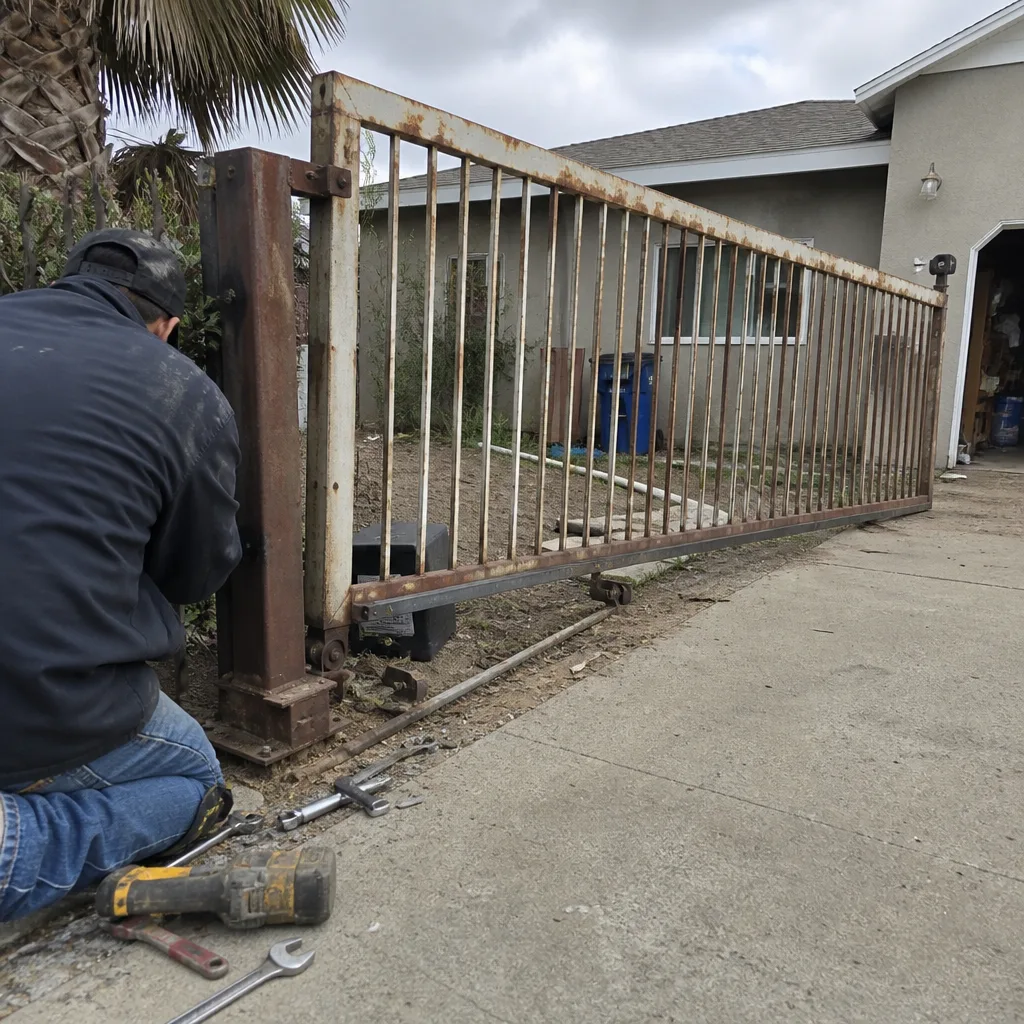 Before
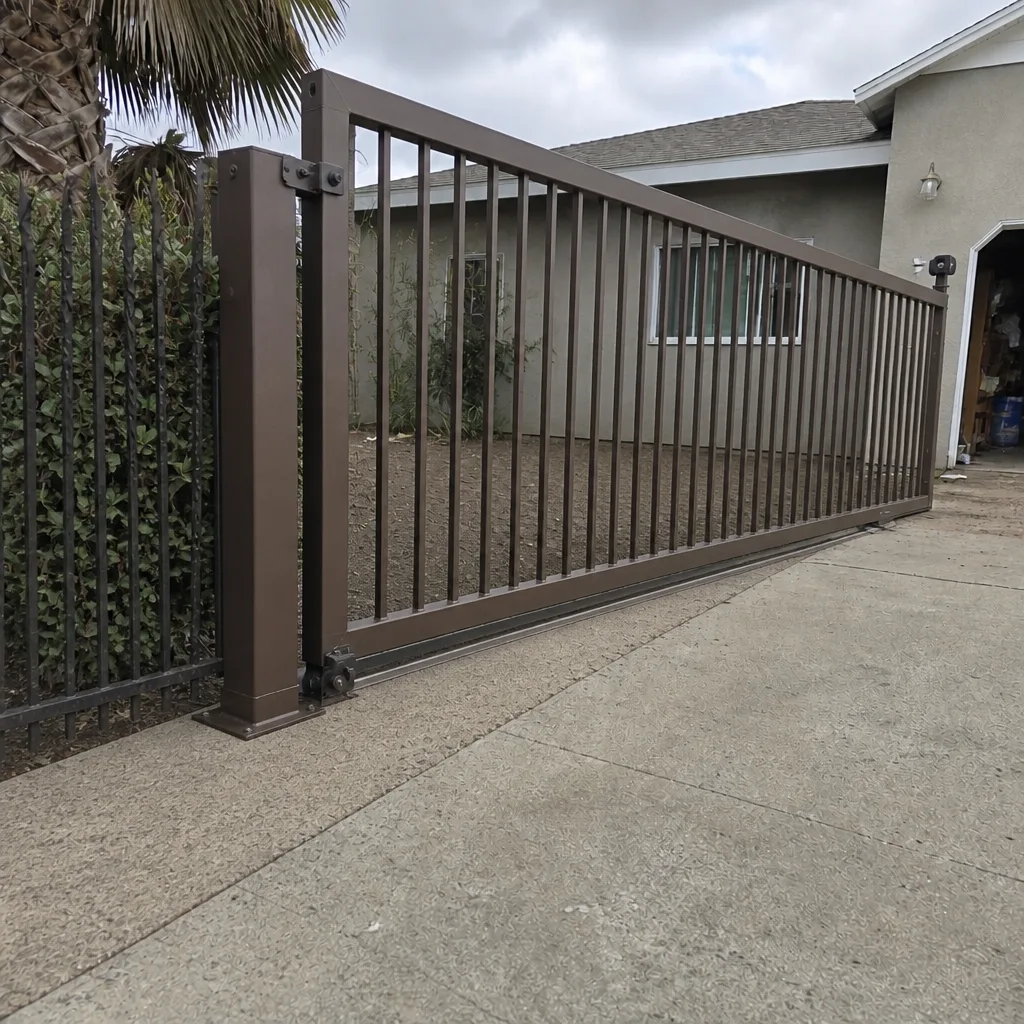 After
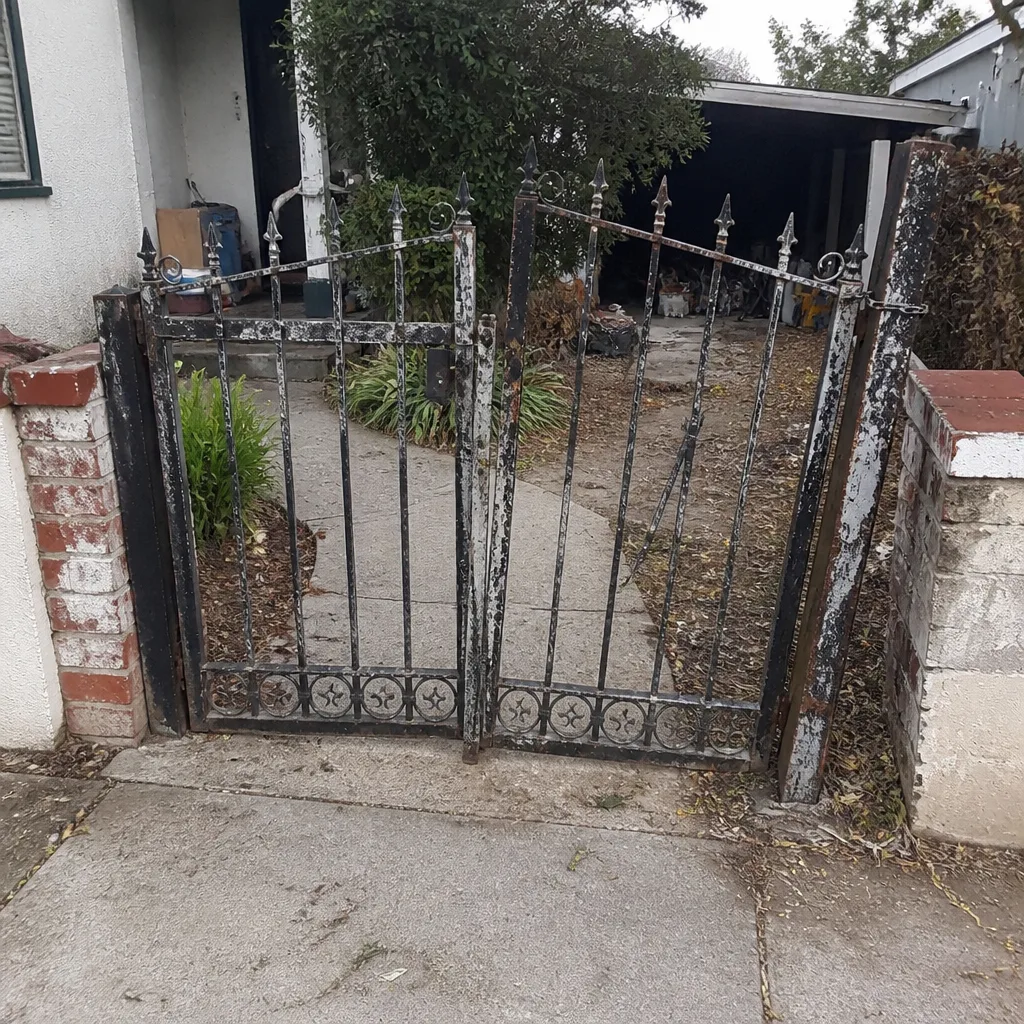 Before
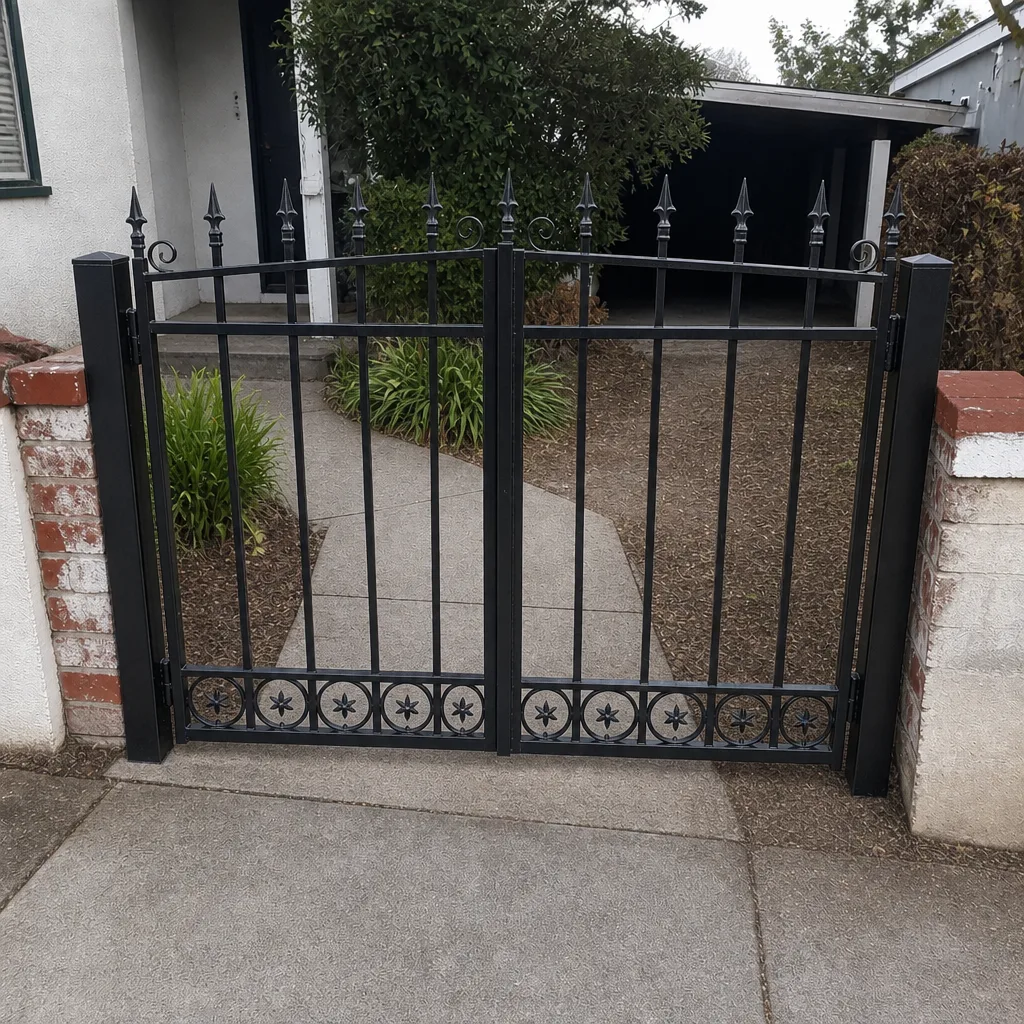 After
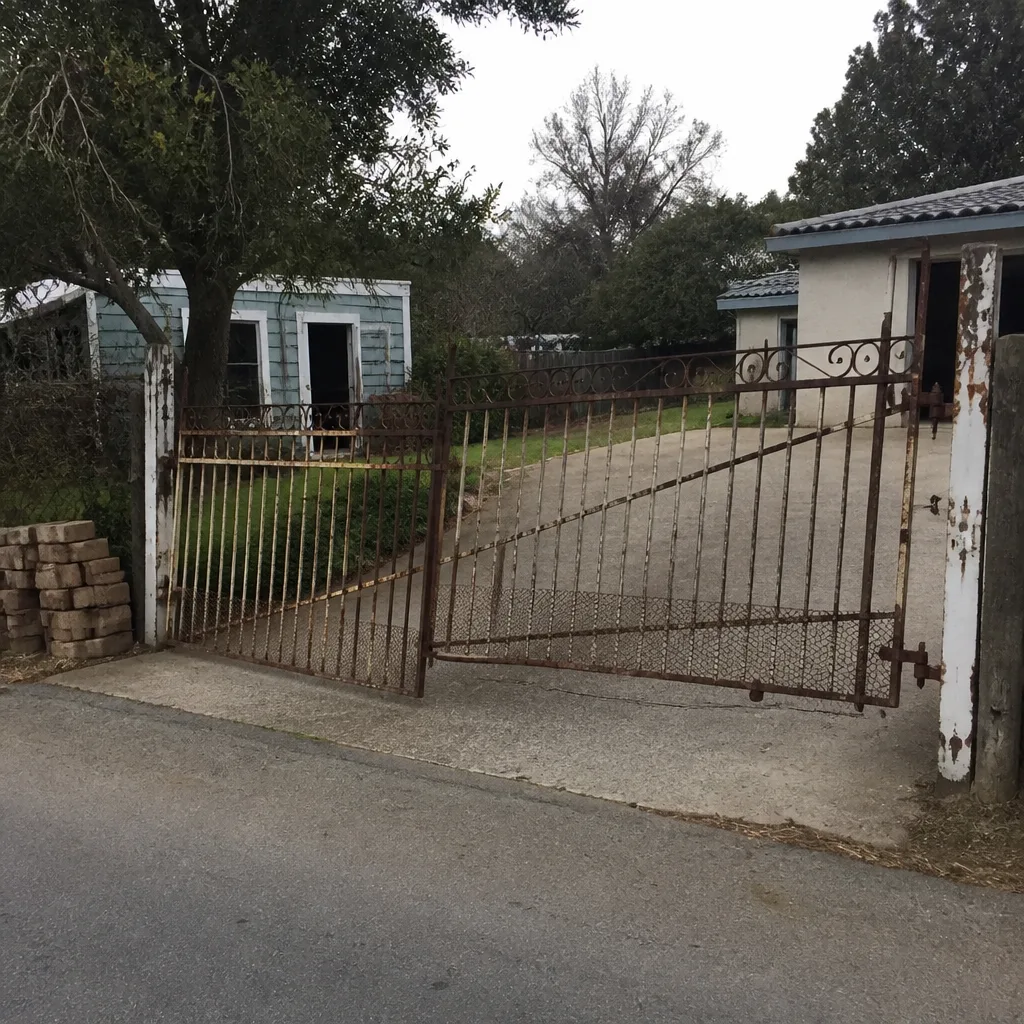 Before
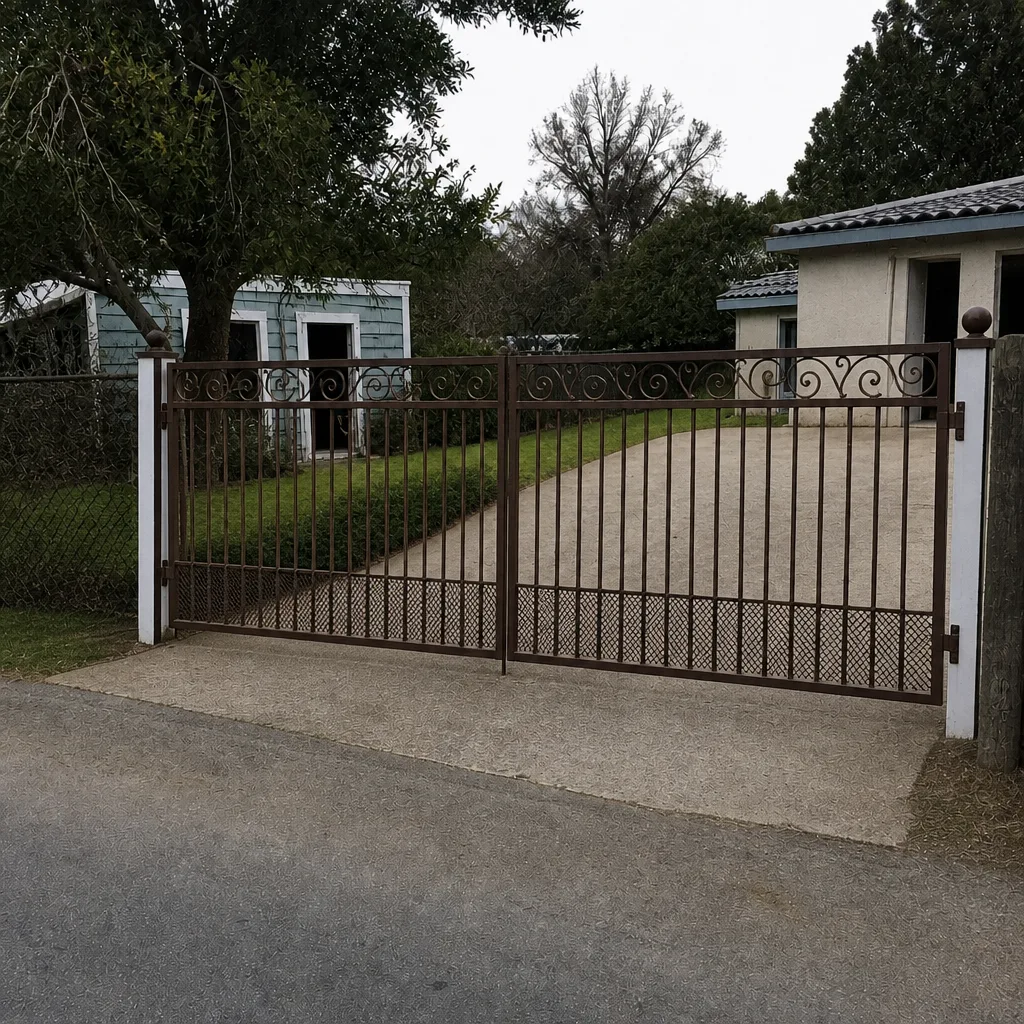 After
Common Mistakes to Avoid
- Replacing an operator without asking about entrapment protection. The operator gets swapped, it works fine, and it’s now non-compliant. If you’re replacing an operator anywhere in Salinas, ask the installer what photo eyes or safety edges the replacement requires before the work starts.
- Assuming “it’s just a repair” means “no permit.” Most repairs are exempt, but a repair that turns into new wiring, new posts, or a changed opening is construction. Verify before work begins, not after.
- Pulling the city permit and skipping the HOA. The two approvals run separately. A gate that passes inspection and then faces rejection from Salinas-area HOA architectural review is a gate that gets modified or removed at your expense.
- Cranking the force setting to fix a dragging gate. A gate that needs maximum force to travel is a gate with a failing roller, a sagging leaf, or a weak operator. Forcing it through hides the problem and defeats reversal safety at the same time.
- Relying on an insurance carrier to catch non-compliance after the fact. The carrier catches it in a claim decision, not in advance. If your operator was replaced without the compliant safety devices, that’s already the wrong time to learn.
- Leaving wireless safety edges on dead batteries. A battery-powered edge that hasn’t been tested in a year can read fine on the operator’s status light and fail on contact. Test the edge itself during any inspection prep.
- Hiring a generalist for a specific problem. Gate wiring, entrapment protection, and operator diagnostics aren’t a side job. A handyman who can mount the gate may not be able to bring the operator and safety devices into compliance.
When to Call a Professional
Some gate issues are simple adjustments. Others carry real safety exposure, and the second group is worth a call. Reach out if your operator reverses inconsistently or not at all, if you can’t confirm your photo eyes or safety edges are actually functioning, if a gate drags or hesitates through its travel, if the operator was replaced and you’re not sure the safety devices came with it, or if you’re planning a new gate or a change to an existing opening. Anything that involves the electrical circuit or a heavy panel that might come off its track belongs in trained hands, and we’d rather inspect a gate that turns out to be fine than read about one that wasn’t. Gate Repair Salinas offers free estimates in Salinas, and a written estimate sets the final price before any work starts. Call (888) 704-3384. We answer 24/7. Fast dispatch from 7am to 7pm, Sunday through Friday.
Frequently Asked Questions
Usually not, as long as the replacement operator goes into the same location and the same type of system, because that reads as repair rather than construction. New electrical circuits or a change to the gate opening change the answer, and the safe move is to call the City of Salinas building department and describe the job. What you should always confirm is that the replacement operator has UL 325 entrapment protection installed and working, whether or not a permit is involved. If you’re unsure which side of the line your job sits on, call (888) 704-3384 – estimates are free and we’ll tell you what the work involves.
UL 325 is the safety standard California applies to automated gate operators, and it requires the gate to sense an obstruction and stop or reverse before it strikes, pins, or crushes someone. It matters because an operator installed without compliant photo eyes or safety edges creates liability for the property owner, and can give an insurance carrier grounds to deny a gate-related injury claim. It applies to residential and commercial gates alike. Call (888) 704-3384 to have your entrapment protection checked – estimates are free.
Yes, an HOA can impose requirements that sit entirely outside the city permit process, and in Salinas-area developments it often does through architectural review of style, height, material, and placement. City approval and HOA approval are separate, and passing one doesn’t satisfy the other. Get HOA sign-off first, then pull a city permit if one is required. Call (888) 704-3384 for a free estimate – the written estimate sets the final price before any work starts.
An inspector checks that the built gate matches the approved plans, that photo eyes and safety edges function and reverse the gate on obstruction, that the operator’s force setting allows proper reversal, that the electrical connection is properly routed and grounded, that required warning signage is present, and that posts and footings are to spec where the permit covers structural work. The reversal tests are where most inspections are won or lost.
In most cases yes, and the gate itself usually doesn’t need replacing. Compliant photo eyes and safety edges get added to the existing operator, wired into its designated terminals, and the force and reversal settings get trimmed and tested. Older operators sometimes need a control board upgrade or add-on module to accept the safety devices. Whether new wiring needs a permit depends on the circuit, so confirm with the City of Salinas building department. Call (888) 704-3384 for a free estimate on the retrofit.
We work with nine brands: LiftMaster, FAAC, BFT, Linear, Viking, Ghost Controls, DoorKing, Elite, and Mighty Mule. If yours is on that list, our technicians are experienced with its specific logic and components rather than applying a one-size-fits-all approach. If yours isn’t, we’ll tell you upfront instead of guessing. Call (888) 704-3384 for a free estimate.
The Bottom Line
Most gate repairs in Salinas don’t need a permit, but most gate installations and opening modifications do, and the line between them is worth knowing before work starts. Whatever the permit answer, UL 325 entrapment protection is the requirement that actually protects you: compliant photo eyes and safety edges, installed to cover the full travel path, tested so the gate reverses on obstruction. HOA approval runs separately from the city permit, so get both in order. And if your operator was replaced without the safety devices, the fix is usually a retrofit rather than a new gate. When you’re ready to sort it out on paper and on the gate itself, our Gate Repair Salinas team covers repair and installation in one call. For a wider look at what we handle in the area, the Salinas page lays it out. Call (888) 704-3384 for a free estimate. We answer 24/7, with fast dispatch from 7am to 7pm, Sunday through Friday.
Written by the team at Gate Repair Salinas.