
Last updated November 16, 2026
 Wrought iron
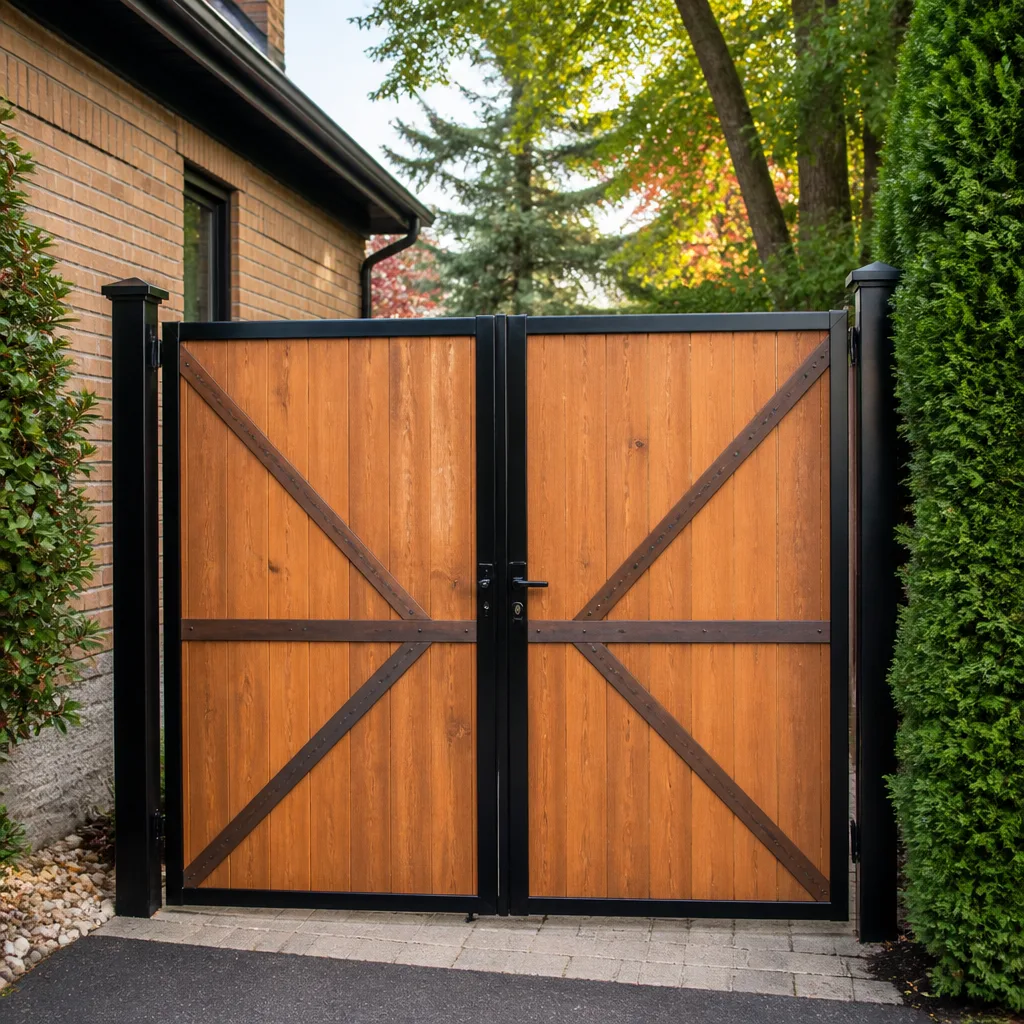 Wood & steel frame
 Farm & ranch
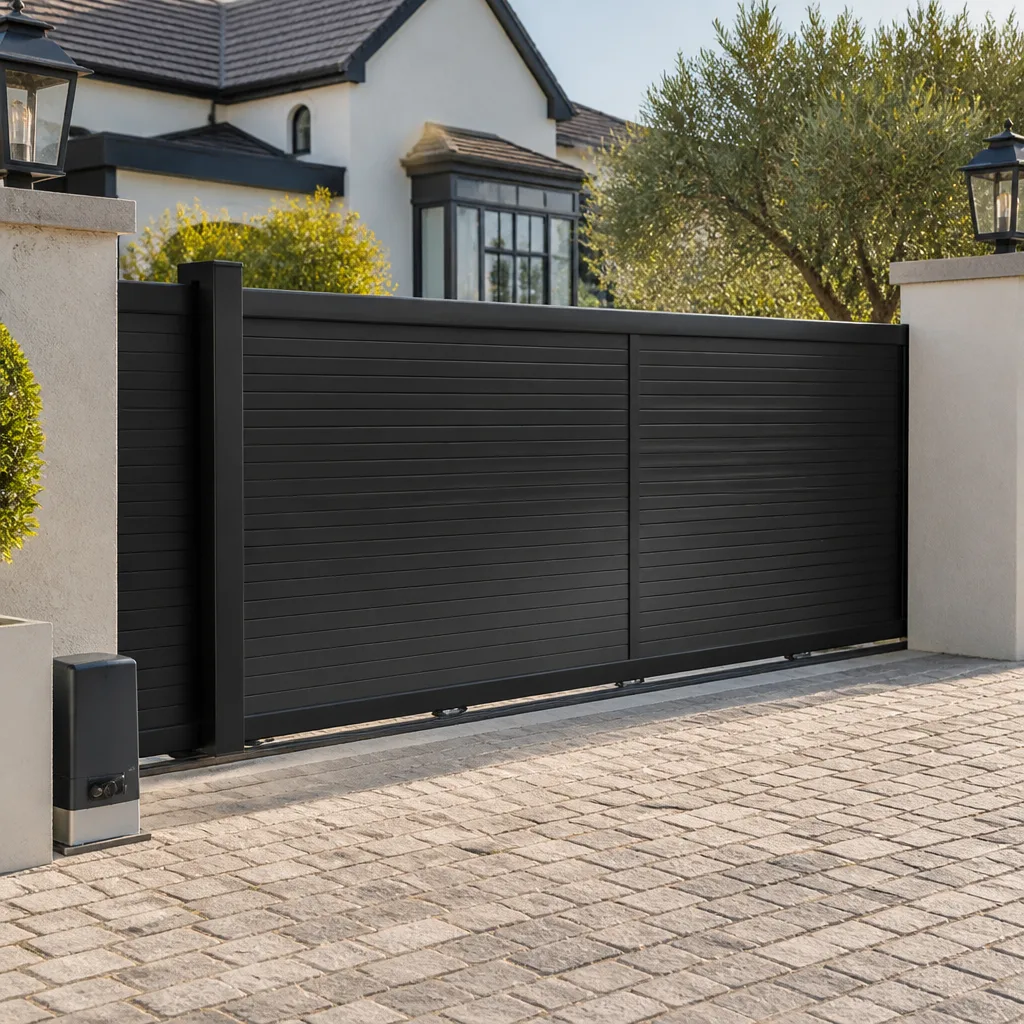 Sliding driveway gates
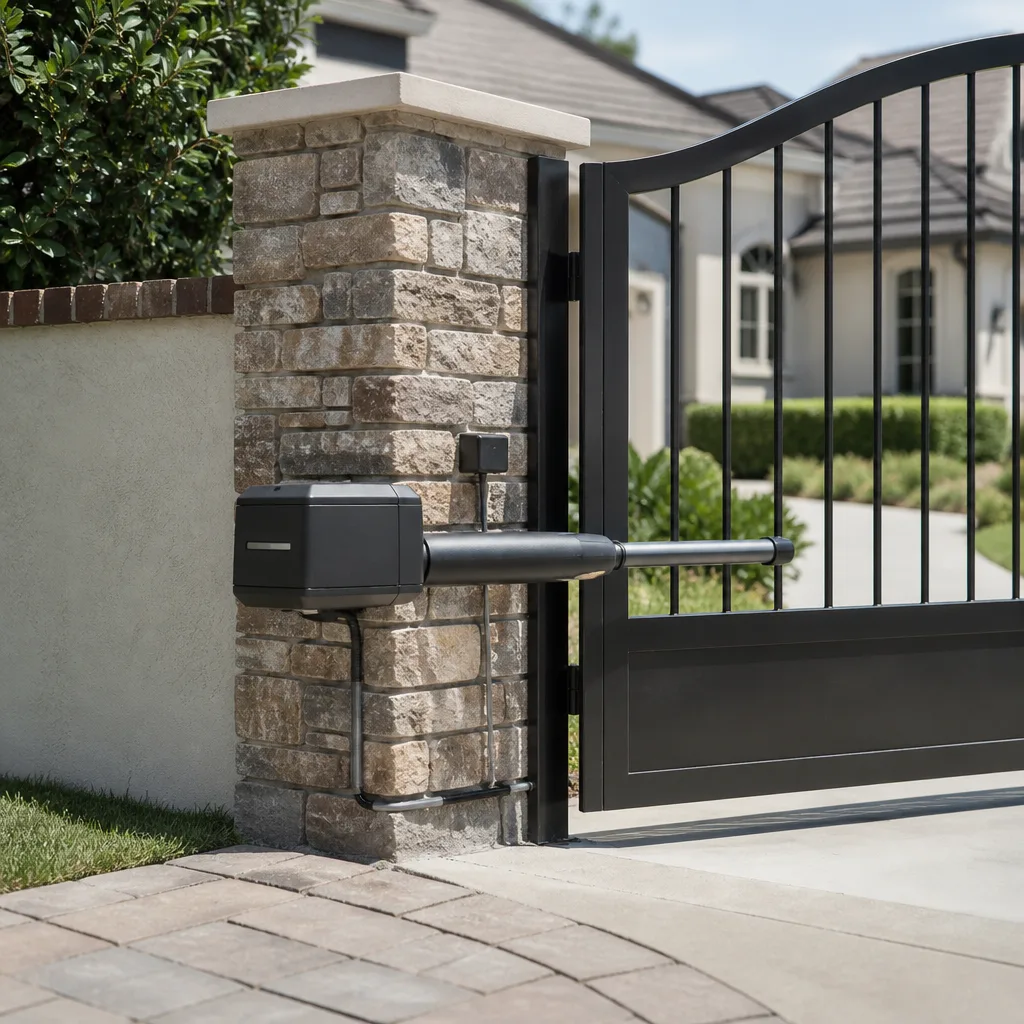 LiftMaster operators
Free on-site gate assessment - hinges, posts, and your LiftMaster or Nice gate operator checked before anything is quoted
The assessment is free and the quote is the invoice.
Get your free estimateDIY vs Professional Gate Repair: The Salinas Homeowner’s Decision Guide
Replacing a remote battery is DIY. Adjusting the force settings on an automated operator without understanding UL 325 entrapment force limits is not, and getting it wrong doesn’t just break your gate. It creates a hazard that can injure a child or a pet. That’s the line this guide draws. The DIY vs professional gate repair question usually gets framed as a test of your mechanical confidence, but confidence isn’t the deciding factor. Consequences are. Some tasks have none worth worrying about. Others carry legal weight, safety weight, or both, and in Salinas those lines are sharper than most homeowners realize. We’ll sort the work into three buckets: what you should handle, what sits in a gray zone, and what stays with a trained technician every time.
Quick Answer
Most homeowners can safely handle remote batteries, visual inspections, and hinge lubrication on their own. Anything involving operator wiring, control board replacement, entrapment device calibration, or structural post work belongs to a licensed gate technician. The dividing line isn’t mechanical skill. It’s whether a mistake can injure someone, void a warranty, or shift liability onto you if the gate fails.
Styles & brands we work with
- Wrought iron
- Wood & steel frame
- Farm & ranch
- Sliding driveway gates
- LiftMaster operators
Table of Contents
- The Three-Bucket Framework: DIY, Gray Zone, Professional-Only
- Tasks That Are Genuinely DIY-Safe
- The Gray Zone: Where Judgment Calls Live
- California Liability: What Happens If a Gate Injures Someone
- What Tools You Actually Need (and What Gear Signals You’ve Gone Too Far)
- When a DIY Attempt Voids Your Operator Warranty
- How to Call a Professional Without Paying for Your Own Mistakes
- UL 325 and Entrapment Protection: Why Force Settings Matter
The Three-Bucket Framework: DIY, Gray Zone, Professional-Only
Every gate repair task falls into one of three categories, and sorting your problem into the right one is the single most useful skill this guide can teach you. The framework is simple: how bad is the worst-case outcome if you get it wrong?
Bucket one: genuinely DIY-safe. These tasks have low-stakes failure modes. If you mess up, the gate still works or it stops working in a way you can’t miss. You’ll know immediately, and nothing gets damaged permanently. Battery swaps, hinge lubrication, and visual inspections all land here.
Bucket two: the gray zone. These tasks are technically approachable but require understanding how the system behaves. Limit switch adjustment and minor track alignment are the two prime examples. A capable homeowner with the manual and some patience can do them. But if you don’t understand what the switch controls or how much travel the gate needs, you can over-torque an operator and burn out a motor or knock the gate off its rollers. We’ve seen both.
Bucket three: professional-only. These are the tasks where mistakes don’t announce themselves. Operator wiring, control board replacement, structural post work, and entrapment device calibration all sit here. A wiring error can leave the gate working perfectly while hiding a safety failure. A miscalibrated force setting is invisible until someone gets hurt. That’s the defining feature of bucket three: silent failures.
In Salinas, this framework matters more than it does in a lot of places, because so much of the housing stock has automated gates on older operators that were installed before current safety standards became standard practice. A gate that’s been quietly mismatched to its operator for years can turn a DIY adjustment into a real problem.
Tasks That Are Genuinely DIY-Safe
Here’s what you can do without calling anyone, and please do call us for anything outside this list if you want a second opinion. Free estimates exist for a reason.
- Replacing remote and keypad batteries. Swap the batteries, test the remote from inside your car, and if the gate still won’t respond, take that as your first signal something bigger is going on. Intermittent remote function that doesn’t resolve with a fresh battery is quietly one of the most common reasons people call us.
- Visual hinge and hardware inspection. Walk the gate line. Look for bent hinges, loose bolts, rust or wear on pivot points, and any hardware that looks like it’s pulling away from the post. You’re not fixing anything here. You’re cataloging, and if you find something significant, that catalog becomes useful when you call.
- Lubricating hinges and pivot points. A light application of a gate-safe lubricant on moving parts, not the operator gears, is fine. Avoid spraying anything into the operator housing. That’s not yours to open.
- Clearing debris from the gate path and sensor lenses. Wipe down photo-eye lenses with a soft cloth and sweep leaves and dirt from the track or swing path. Those photo-eye sensors are the safety beam that stops the gate from closing on something in its path, and a dirty lens causes more phantom “gate won’t close” calls than most homeowners expect.
- Testing the safety reverse feature. On a swing gate, block the photo-eye beam with your hand while the gate is closing. The gate should stop and reverse. On a slide gate, do the same test. If it doesn’t reverse, call us. That’s a safety failure with immediate implications, and it’s not a DIY fix.
- Checking the manual release. Find your operator’s manual release, make sure you know how it works before you need it, and test it in a safe, level spot. If you can’t find it or it doesn’t work, that’s a call.
That’s the full DIY-safe list. It’s shorter than most homeowners expect. That’s intentional.
The Gray Zone: Where Judgment Calls Live
The gray zone is where capable homeowners get into trouble, because the tasks look like DIY work right up until they aren’t. Two examples dominate.
Limit switch adjustment
A limit switch tells the operator where the gate is supposed to stop. When the gate overshoots its open or closed position, the limit switch usually needs adjustment. On some operators, this is a simple cam or screw adjustment described plainly in the manual. On others, especially older LiftMaster and FAAC units, the switch interacts with the encoder or controller in ways that aren’t obvious from the outside.
If you’ve adjusted the switch and the gate behavior didn’t change, don’t keep going. That usually means the switch isn’t the problem, and forcing the adjustment can damage the operator’s position sensing, which turns a small fix into a motor or controller problem.
Minor track alignment
On sliding gates, a track that’s off by a fraction of an inch can cause binding, stuttering, or a gate that jumps its rollers. Small alignment corrections with basic hand tools are within a homeowner’s reach if you’re cautious. But alignment corrections rarely stay small. If the gate has come off the track, the underlying cause is nearly always post shift or roller wear, and both involve structural work that shouldn’t be attempted without knowing exactly what you’re adjusting and why. A slide gate that comes off its track can crush a person standing in its path, so this is the one place where we strongly recommend you stop and call.
In our experience, the useful question in the gray zone is: if I get this wrong, will I know right away, or will the gate seem fine until it isn’t? If the answer is the latter, it isn’t gray anymore.
California Liability: What Happens If a Gate Injures Someone
This is the section most homeowners skim, and it’s the one that determines whether a gray-zone task is worth attempting. Under California premises liability principles, a property owner owes a duty of reasonable care to people who come onto the property. When an automated gate injures someone, the question a court or an insurer will ask is not whether the gate failed. It’s whether the owner exercised reasonable care in maintaining it, and whether any modifications or repairs were done correctly.
Two practical implications follow.
- DIY modifications change the liability picture. If you adjusted force settings, replaced a control board, or rewired the operator yourself and the gate later injures a child, the record shows the work was not done by a trained professional. That’s a harder position to defend, regardless of whether your repair actually caused the injury.
- Documentation is your defense there. Service records, dated inspection notes, and evidence that repairs were performed by a technician who knows the operator’s safety systems are what “reasonable care” looks like on paper. This is especially relevant for HOA-managed gates in Salinas, where the HOA board needs records it can produce if something goes wrong. If you manage a property with an automated gate, your maintenance file is your liability insurance policy against a claim.
We’re not lawyers, and we don’t give legal advice. But we’ve worked on enough Gates in Salinas to see the pattern: the properties with clean service records handle incidents very differently from the ones with a history of half-finished DIY attempts. If you’re weighing a gray-zone repair against your own liability exposure, the math almost always favors a professional visit.
What Tools You Actually Need (and What Gear Signals You’ve Gone Too Far)
The DIY-safe tasks on this list need almost nothing. Here’s the complete kit.
- A set of screwdrivers (Phillips and flathead)
- Adjustable pliers
- A wire brush for light rust removal on hardware
- Gate-safe silicone or lithium lubricant
- A soft microfiber cloth for photo-eye lenses
- A small notebook or phone app for recording what you observe
That’s it. If you find yourself reaching for anything else, stop and think about why.
The gear that signals a job has moved out of DIY territory:
- A multimeter. If you’re testing voltage at the operator or control board, you’re doing electrical diagnostic work, and you should stop.
- A torque wrench for post work. Post adjustment and structural repair is bucket three work.
- Wire strippers or a soldering iron. Rewiring an operator is professional-only, and it has code implications.
- A ladder tall enough to reach the operator housing on a slide gate. Working at height on gate hardware carries fall risk and gets into the operator’s internal wiring on the way down.
- Anything an operator manual calls a “calibration” or “force adjustment.” These carry entrapment consequences.
If you bought a tool for a specific gate task and didn’t already own it, that’s a useful signal about scope. It’s worth running the same free estimate we’d give anyone. We work on Elite and Mighty Mule systems as well as the major commercial brands, so you’ll get a real answer, not a generalist guessing.
When a DIY Attempt Voids Your Operator Warranty
Operator manufacturers write their warranties to cover defects, not modifications. When a homeowner opens an operator housing, replaces a control board, rewires connections, or adjusts force settings outside the specified procedure, most warranties treat the resulting damage as outside coverage. That’s true for LiftMaster, FAAC, Viking, and most other brands a Salinas homeowner is likely to encounter.
Three specific actions tend to trigger warranty problems:
- Opening the operator housing. Even if you don’t change anything, most manufacturer terms treat that as evidence of unauthorized intervention, and they will ask.
- Force-setting changes. Because force settings are tied to entrapment safety compliance, manufacturers are strict about unauthorized changes. If you’ve adjusted the force setting and a failure follows, expect the claim to be denied.
- Replacing components with non-OEM parts. Aftermarket boards and motors often lack the matching certification, and the warranty will exclude the entire assembly once a non-OEM part is installed.
A gate-only specialist has the manuals and procedures in front of them, so the work stays within the manufacturer’s terms. When your LiftMaster operator is still under warranty and you’re not sure whether your planned fix crosses a line, a quick call protects the coverage. We can tell you whether the fix is covered and how to keep the warranty intact.
UL 325 and Entrapment Protection: Why Force Settings Matter
UL 325 is the safety standard that governs automated gate operators, and it exists because gates that close with force can injure or kill people caught in their path. The standard covers how much force an operator may apply, how quickly it must stop and reverse when an obstruction is detected, and what kinds of secondary entrapment protection devices, such as photo-eye sensors and edge sensors, are required for a given installation type.
When you change a force setting, you’re changing the physical behavior that the standard governs. A gate that closes with too much force won’t necessarily fail a test at the time. It may just close a little harder, and you may not notice. That’s exactly the problem: a miscalibrated force setting is a silent hazard that only reveals itself the day something or someone is in the gate’s path.
There’s also a testing dimension. Entrapment protection devices need to be tested against the manufacturer’s procedure to confirm they trigger the reverse response at the right force level. A gate can pass a simple hand-wave test and still fail a proper force calibration check. That’s why we treat force adjustment and entrapment device calibration as bucket-three work without exception.
If you have a Salinas property with a gate near a sidewalk, driveway crossing, or play area, the risk profile is higher, and that’s true whether the gate is a residential swing gate or a commercial slide gate on a managed property. If you’re not sure whether your gate’s entrapment protection was set correctly, that’s a reasonable reason to call us. Free estimates, and we’ll talk you through what the inspection would cover.
How to Call a Professional Without Paying for Your Own Mistakes
If you’ve already attempted a repair and it didn’t fix the problem, tell us exactly what you did and in what order. That’s the single most useful thing you can do on the call, and it prevents our technician from spending diagnostic time retracing your steps. Here’s the structure that actually helps.
- The symptom in the order it appeared. “The gate stopped opening last Tuesday, then started opening but not fully, then this morning it wouldn’t open at all” tells us the encoder or limit switch is likely involved. “The gate is broken” doesn’t.
- What you attempted, in what order, and with what result. “I replaced the battery in the remote, then reset the limit switch by following the manual, then the gate overshot the closed position.” That sequence tells a trained technician where to look next.
- Whether you adjusted the force setting or anything on the operator housing. This changes how we approach the call. Be direct about it.
- The operator brand and model if you can find it. LiftMaster, FAAC, Elite, Viking, and others have different diagnostic procedures. We work on a specific list of brands, so the more precise you can be, the faster we land on the right process.
- Whether the gate is still safe to operate. If the gate is reversing incorrectly, failing to reverse, or moving unpredictably, don’t operate it until a technician looks at it. That’s an immediate safety issue.
- Any recent power outage or storm. Operators often need to re-learn their positions after a power interruption, and knowing that saves diagnostic time.
Call (888) 704-3384. We answer 24/7. Fast dispatch, 7am-7pm, Sunday through Friday. A thorough description on the call helps us arrive with the right expectation, and it makes the estimate cleaner.
See the difference
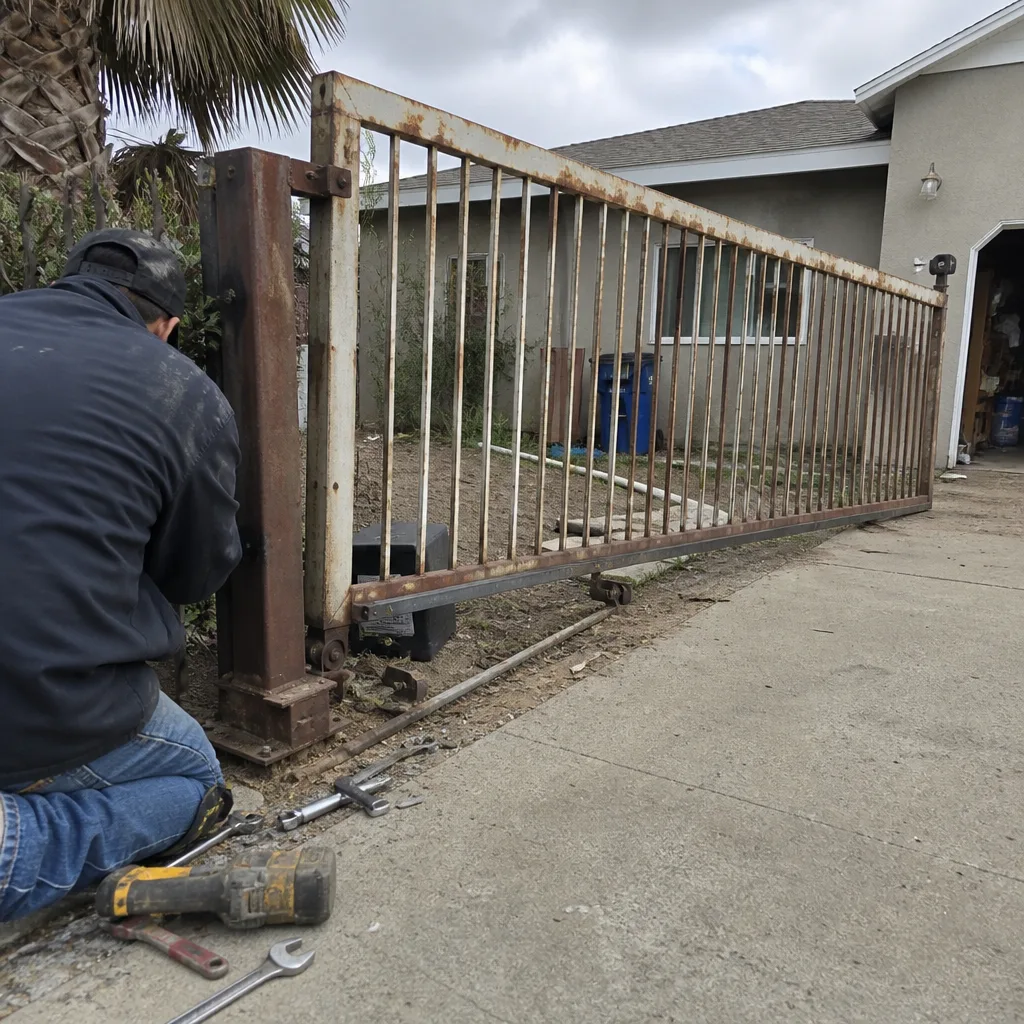 Before
 After
 Before
 After
 Before
 After
Common Mistakes to Avoid
- Adjusting force settings without a force-measurement procedure. The setting has a legal dimension under UL 325, and getting it wrong creates a hazard the gate won’t advertise on its own.
- Opening the operator housing to “take a look.” Even inspection can affect warranty coverage on LiftMaster, FAAC, and Viking operators, and it puts you in front of live wiring.
- Ignoring a gate that fails its reverse test. A gate that doesn’t reverse on obstruction is a safety failure, not a convenience issue. If you’re in Salinas and your gate fails the reverse test, stop using it and call.
- Cutting into operator wiring to add “just one” accessory. Control board wiring follows specific low-voltage paths, and a cut wire is often the start of a control board replacement.
- Trying to fix a gate that came off its track. The track coming off is a symptom of a structural problem. Attempting alignment without fixing the root cause means the gate comes off again, sometimes on a person.
- Not documenting the maintenance history. This matters most for HOA-managed gates in Salinas, where the HOA board needs a paper trail to defend itself in a liability claim.
- Assuming a general handyman has gate experience. Not all of them do, and a gate operator isn’t the same as a garage door opener. The wiring, the sensor logic, and the entrapment requirements are different.
When to Call a Professional
Call a technician when the gate fails to reverse on obstruction, when the operator won’t respond to the remote after a battery swap, when the gate has come off its track or is binding against the ground, when the operator housing needs to be opened, when force settings have been changed or need adjustment, or when the gate has been visibly damaged by impact or storm. Also call if your operator is under manufacturer warranty and you’re unsure whether your planned fix is covered. Some of these tasks are quiet safety failures, and a free written estimate is a lot cheaper than the alternative. If you need electric gate repair on a Salinas property, call (888) 704-3384 for a free estimate. Our technicians have up to 15 years of experience, and every visit is handled by a gate-specific technician.
Frequently Asked Questions
Yes, as long as “battery” means the remote or keypad battery, not the operator’s backup battery. Remote and keypad batteries are DIY-safe. The operator’s backup battery, on systems that have one, sits inside the housing and the swap involves opening the operator, so we recommend a technician handle it. Call (888) 704-3384 for an exact quote; estimates are free.
Two things, generally. You may void the manufacturer’s warranty, because force settings are tied to UL 325 entrapment safety compliance, and you may create a silent safety hazard if the force is set beyond the specified limits without a proper force-measurement procedure. A gate can pass a simple hand-wave test and still be miscalibrated. Call (888) 704-3384 to schedule an inspection; estimates are free.
That depends on the specifics of your installation, and we don’t answer that one in a guide because permit rules vary with scope, setback, and property type. Ask the City of Salinas building department what applies to your job before any structural work begins. For the repair or replacement work itself, our technicians can walk you through what’s typically involved.
UL 325 is the safety standard for automated gate operators, covering force limits, reverse response, and entrapment protection device requirements. It matters because a gate that meets the standard protects people caught in its path, and a gate that doesn’t (or has been adjusted outside the standard) may injure a child or pet without any visible sign of a problem beforehand. For gate repair involving operator wiring or entrapment devices, we recommend a gate-only specialist.
Tell them the symptom, the order it appeared in, and everything you attempted to fix it, in order. If you adjusted a limit switch, changed a force setting, or opened the operator housing, say so directly; that changes how a technician approaches the call. Call (888) 704-3384. We answer 24/7. Fast dispatch, 7am-7pm, Sunday through Friday.
We recommend a gate-only specialist for anything beyond the DIY-safe list, and specifically for operator wiring, control board replacement, and entrapment device calibration. A generalist’s experience is often spread across multiple trades, and automated gates require brand-specific logic. We work on LiftMaster, FAAC, and other operator brands with the specific diagnostic procedures for each. Call (888) 704-3384; estimates are free.
The Bottom Line
The DIY vs professional gate repair question isn’t about confidence. It’s about consequences. Remote batteries, visual inspections, hinge lubrication, and safety-reverse testing are yours to handle. Limit switches and minor alignment corrections are the gray zone, worth attempting only if you understand the failure mode. Operator wiring, control board replacement, structural post work, and entrapment device calibration are professional-only, and they’re professional-only because their failures are silent. In California, that distinction has a liability dimension: a service record showing proper maintenance is what due diligence looks like when a claim is filed, and a history of DIY attempts on the operator is not. That’s true whether you’re maintaining a residential swing gate or a managed commercial slide gate in Salinas. If you’d rather have the right fix the first time, Gate Repair Salinas offers free estimates and a gate-only team that knows your operator brand. Our technicians have up to 15 years of experience, and we work on your brand from the first visit.
Call (888) 704-3384. We answer 24/7. Fast dispatch from 7am to 7pm, Sunday through Friday. The price is set per job by a written estimate provided before any work begins, and estimates are free.
Written by the team at Gate Repair Salinas.